
FR EN

Our specialists are available

Monday to Friday, 9am to 7pm

Saint-Germain-en-Laye:

01 77 37 03 10

Geneva:

022 512 70 70
Request a quote
Request a quote

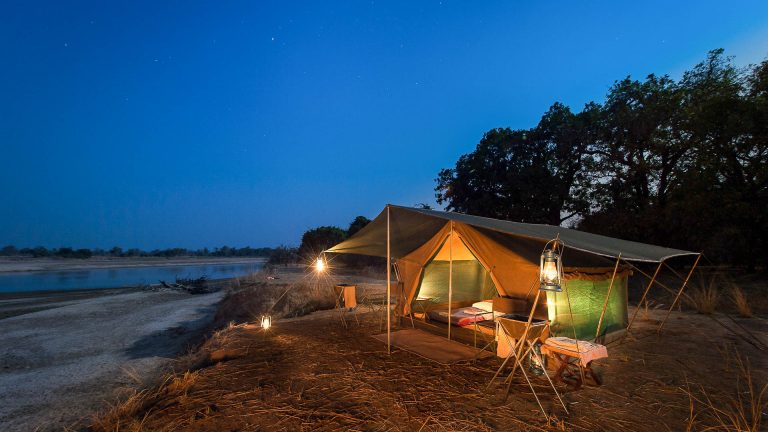
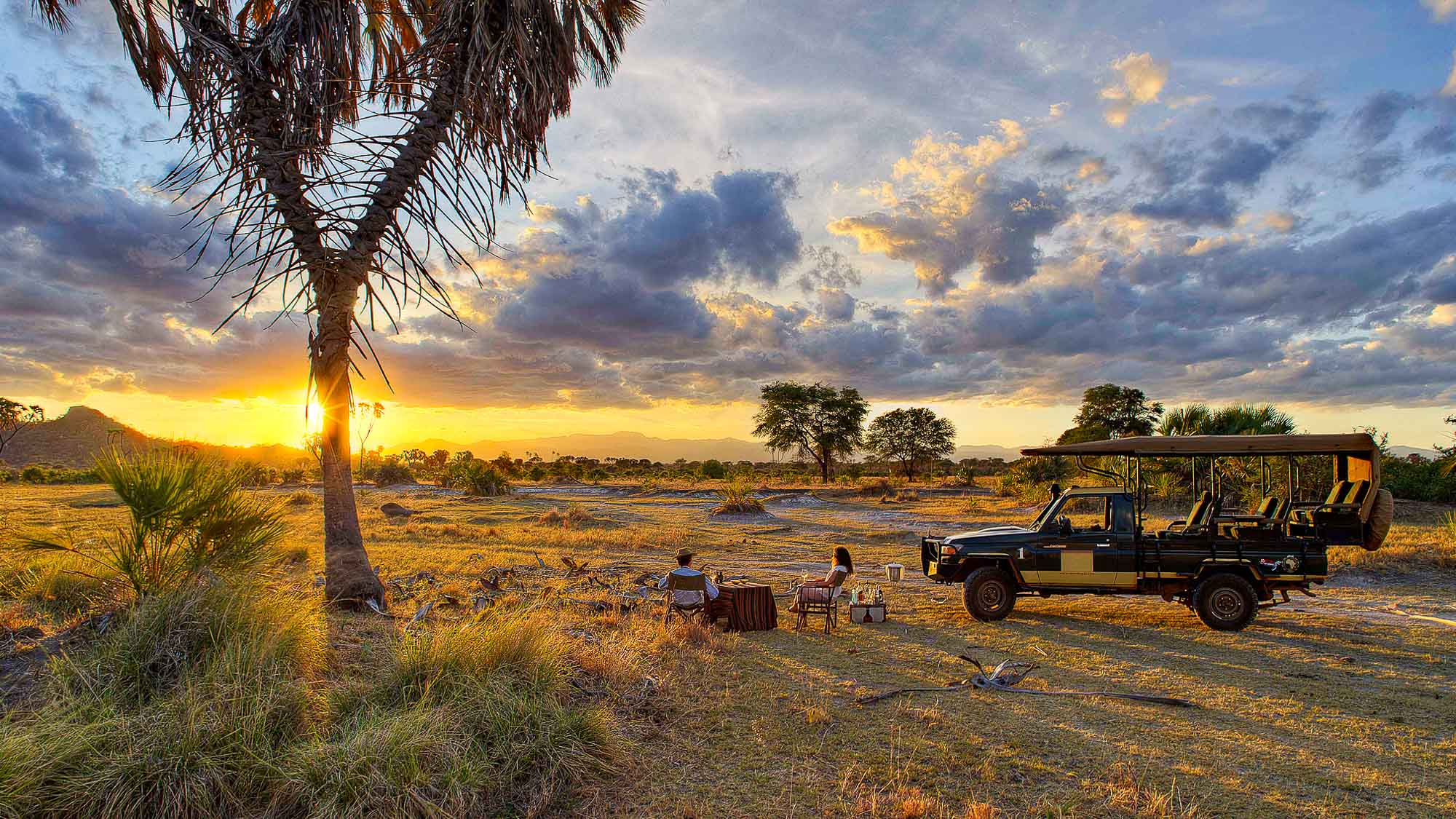
Namiri Plains Camp, Tanzania © Asilia

Safari in Africa

Karibu Katika Afrika!

Safari in Africa

Africa is above all a dream. A dream of freedom, that of the world's first light.
Experiencing a great safari in Africa means daring to leave the beaten track. Taking this journey means exploring the best reserves and national parks to observe and photograph animals in ideal conditions. It also means sleeping in the heart of nature, in carefully chosen lodges, tented camps or bush camps.
The journeys to Africa we design for you have one ambition: to share this African dream by introducing you to the places where we have had our own finest experiences, so that your safari, too, becomes an unforgettable memory.

In Kenya and Tanzania, the renowned Masai Mara and Serengeti are safe bets for seeing Africa's iconic species. Wildlife density here is the highest of any African park. But success comes with its drawbacks, chiefly the often excessive tourist traffic in certain areas, during certain seasons.
This is why, without ruling out these essential sites, we organise safaris there that let you discover them differently. This might mean travelling in a less crowded season, equally rewarding, or favouring private concessions or so-called “conservation areas”, which deliberately limit visitor numbers. From there, your safari becomes exceptional.
In every case, what matters most is having an excellent guide (ideally private, so you can shape each day as you wish, stay as long as you like with the animals, track them, come back later...) and a quality vehicle; staying in the right place according to the season, and remaining long enough near strategic sites to see the animals. This is where our safari expertise makes all the difference.

Safari in Southern Africa

In Southern Africa, Kruger and Etosha are vast parks that are easy to explore with a rental vehicle, without necessarily needing a 4x4. This is a good way to experience a safari in Africa under good conditions on a limited budget, or when travelling as a family, where that same budget, multiplied by three, four or five people, can add up quickly.
Contrary to preconceived ideas — often spread by people who have never actually set foot there — these parks are not overcrowded, except occasionally near the entrances and on the main tracks or roads. Driving a little further, or venturing onto secondary tracks, often leads to remarkable wildlife encounters, with no other vehicle in sight. Of course, you need a bit of luck, patience, to drive very slowly, to stop or wait at a waterhole... But isn't that exactly the charm of these safaris, and the satisfaction of having “found” the animals without a guide's help?

Some will say this can be dangerous. It is true that you may cross paths with large, potentially risky animals. But with a minimum of common sense and caution, following the basic rules given at park entrances, you can safely enjoy these safaris.
The ideal approach is to complement this adventure with a stay in a private reserve, for a high-end safari accompanied by professional guides. There are many such private reserves — enough to leave you thoroughly confused! All the more so since they all tend to present themselves as 4- or 5-star establishments, even those that barely deserve 3! Here again, our experience allows us to recommend the lodges or camps best suited to you, respecting your tastes, your family situation and your budget constraints.
Remember that every Étendues Sauvages journey is tailor-made, designed just for you.
A safari as a couple will differ from a family safari with young children and/or teenagers!

African gems!

Our favourite trio for a luxury safari in Africa is, without hesitation: Botswana - Zambia - Zimbabwe.
We could also add southern Tanzania which, in many respects, is closer to Southern Africa than to East Africa. Parks like Ruaha, Katavi and Mahale rank among the most remote and best-preserved places in Africa. Best suited to seasoned travellers, as seeing animals here is not always easy.
We would also set Namibia apart. You can read all the useful details in the chapter dedicated to Namibia, but to sum it up: “you go to Kenya, Tanzania or Botswana to see animals in extraordinary landscapes, and you go to Namibia to see extraordinary landscapes in which you may, here and there, come across animals”.

Botswana, with the Okavango Delta, the Moremi Reserve and the Central Kalahari, is without doubt the ultimate destination for anyone seeking a truly authentic safari in Africa. But in Zambia, parks such as South Luangwa, Kafue and Lower Zambezi, to name only a few, have little to envy them. The same goes for Mana Pools, Hwange and Gonarezhou National Park in Zimbabwe. All of them are gems of rare beauty.
Here, the experiences on offer are varied and deeply immersive.
South Luangwa is a haven for walking safaris, as is Mana Pools in Zimbabwe. It is possible to spend a full week there on a walking safari, disconnected from everything. In Botswana, you can explore the winding channels of the Okavango by mokoro or small boat, staying in tented camps of exceptional luxury, in every respect. In Zambia, at Busanga, you will take to the skies at dawn for a memorable hot-air balloon flight over the African bush. In Botswana, at Makgadikgadi, you will make new friends when meeting families of meerkats!

The ultimate encounter

Finally, no discussion of safaris in Africa would be complete without mentioning the great apes. Whether chimpanzees or gorillas, in Uganda, Rwanda or Congo. It is a stirring, often deeply moving encounter, particularly with mountain gorillas. Many consider this experience the ultimate wildlife encounter.
To learn everything about gorillas and chimpanzees, take time to read our dedicated chapter on great ape observation.

As you will have understood, there are countless ways to experience a remarkable safari in Africa, and we could have added several more destinations to these few lines.
What matters is organising this journey with all the expertise needed to come home not only with beautiful photographs, but above all with wonderful memories.
We could write page after page of colourful anecdotes, but it is better that you, in turn, can tell us your own African travel stories. Do not hesitate to contact us for more information from our Africa experts.

Read more Collapse

We design your tailor-made safari
Why go on safari with Etendues Sauvages

  • DESIGNING SAFARIS SINCE 2002
  • REAL ON-THE-GROUND EXPERIENCE IN AFRICA
  • ALL OUR SAFARIS ARE TAILOR-MADE
  • NATURE PHOTOGRAPHY EXPERTISE
  • DIRECT COLLABORATION WITH THE BEST OPERATORS

Budget to plan for

As you might expect, budgets for a safari in Africa vary considerably. Here we are only discussing individual journeys, not group trips with fixed departure dates and set itineraries.

Your budget will mainly depend on the type of organisation you want, the category of accommodation booked, which services are included, and also the country. We recommend consulting the pages dedicated to each country for a more precise idea, and above all, getting in touch with us to discuss it. When designing a tailor-made journey, there are as many solutions as there are travellers!

As a broad guide, expect a minimum of €3,500 per person for a good safari in South Africa with a rental vehicle; between €5,000 and €7,000 per person for a safari with a private driver-guide in Tanzania or Kenya, for example; and over €8,000 per person for a fly-in safari in Botswana, Zambia or Zimbabwe, for example.

Read more Collapse

Expert advice

A safari in Africa should mean “slow travel”. Naturally (and this is entirely understandable), you want to see everything, to cover an entire park, an entire country, in one trip. It is indeed frustrating to realise you have only covered a few square kilometres of a park like the Serengeti, which spans more than 14,000 km², or Kruger, which exceeds 19,000 km²! For comparison, the Île-de-France region covers 12,000 km².
Unless you are particularly lucky, the most rewarding safaris — those during which you witness the most behaviour — are the ones where you stay long enough in one area to explore it properly and observe the animals. Of course, choosing the right zone according to the season is essential!
Most tour operators offer circuits with well-worn, repetitive itineraries, unchanged throughout the year. You always go to the same place, regardless of season. So much more convenient… for the operator!
That is not our approach to safari. Country by country, region by region, it is essential to design your journey according to your own aspirations, of course, but also according to the best chances of observing wildlife. Even though, from that point of view, nothing can ever be guaranteed. That is what gives the African safari all its charm!

Read more Collapse

Our clients say it best

Your questions / Our answers

Is it dangerous to go on safari in Africa with a rental car?

In our view, the only African countries where renting a vehicle is possible and where driving for safaris is straightforward are South Africa and Namibia.
Driving your own vehicle in certain parks carries no particular risk if you follow a few basic rules, most of which come down to common sense.

Here are some of them:
– drive very slowly, respecting the maximum speed limit. Aside from the fact that driving fast can be dangerous on a dirt track (risk of skidding off), you could hit an animal crossing unexpectedly — and you might not even see it coming!
– animals always have the right of way, especially the larger ones such as elephants! NEVER try to force your way past; keep your distance instead.
– if a large animal such as an elephant moves toward the vehicle, back away very slowly. In any case, you must leave it room to pass. It needs space to feel safe.
– never get out of the vehicle outside the zones authorized by the park authorities.
– even in authorized zones, remain very cautious and stay close to the vehicle. Keep the doors open.
– stay calm at all times; don’t shout, don’t sound the horn… a frightened animal can become a dangerous one.
– if an animal comes very close to the vehicle, roll up the windows.

Still, be very careful on the road, particularly near towns and villages. Many people walk along the roadside.
For this reason, renting a vehicle in Zimbabwe is not recommended.

In Botswana, the tracks in national parks and reserves are “tricky,” often deep sand. Renting a vehicle with a rooftop tent should be reserved for those who know the animals well and are experienced driving a 4×4 in difficult conditions. Otherwise, there is a risk of a dream holiday turning into a nightmare…

In Namibia, it is strongly advised against trying to track desert elephants and desert lions with a rental vehicle. For one thing, you would likely never find them. For another, desert elephants can be far more unpredictable than their savannah counterparts, and therefore potentially more dangerous. These safaris should be done with experienced guides.

Can you go on safari in Botswana by renting a vehicle?

The answer is yes, but it’s not advisable at all.
In Botswana, tracks in national parks and reserves are mostly very sandy, particularly in the Moremi reserves and in Chobe National Park around Savute.
Renting a vehicle with a rooftop tent should be reserved for those who know the animals well and are used to driving a 4×4 in difficult conditions. Otherwise, there’s a risk of a dream holiday turning into a nightmare…

Can you go on a mobile tented safari without a guide?

Yes, this is entirely possible but not advisable at all unless you have thorough knowledge of Africa and animal behaviour.
The first challenge is driving a 4×4 in difficult conditions with large, potentially dangerous animals nearby. What do you do if you’re stuck on a track with a few dozen elephants around you? Believe us, the first time is quite something!
Then comes the matter of camp logistics. You need to be 200% self-sufficient (water, food, fuel, electricity…), with no means of communication other than a satellite phone. South Africans or Namibians who organise these trips themselves spend several weekends and holidays in the bush every year. They’re experienced and over-equipped. We are not.
Moremi Reserve is not the Fontainebleau forest!
For your holiday to actually be a holiday, we recommend using the services of a guide and a team that handles all the logistics, whether travelling in a small group of 6 or 7 people, or on a private basis.