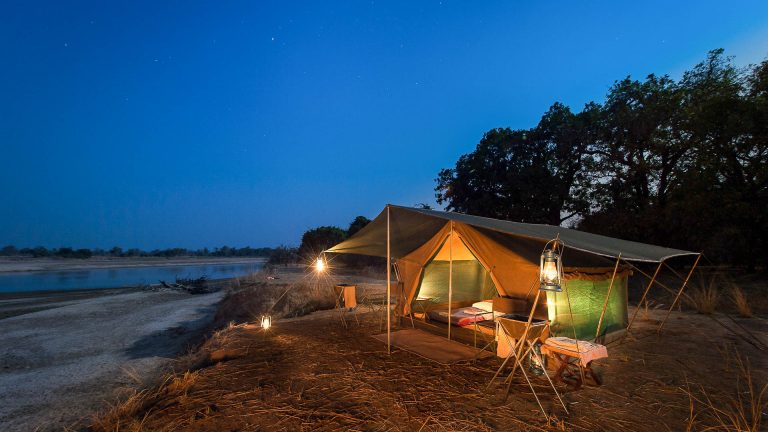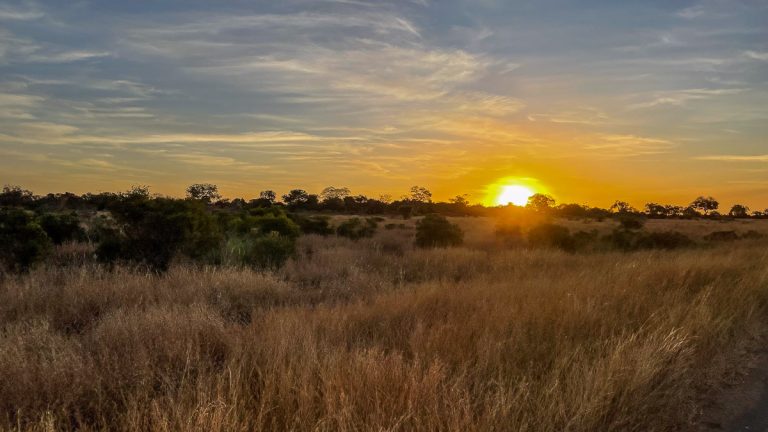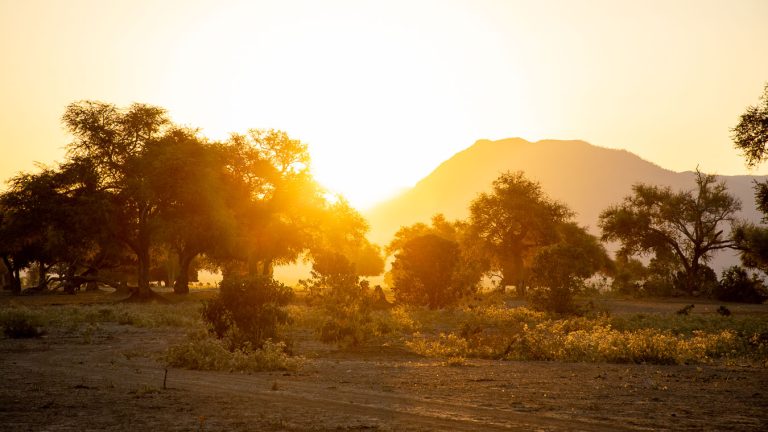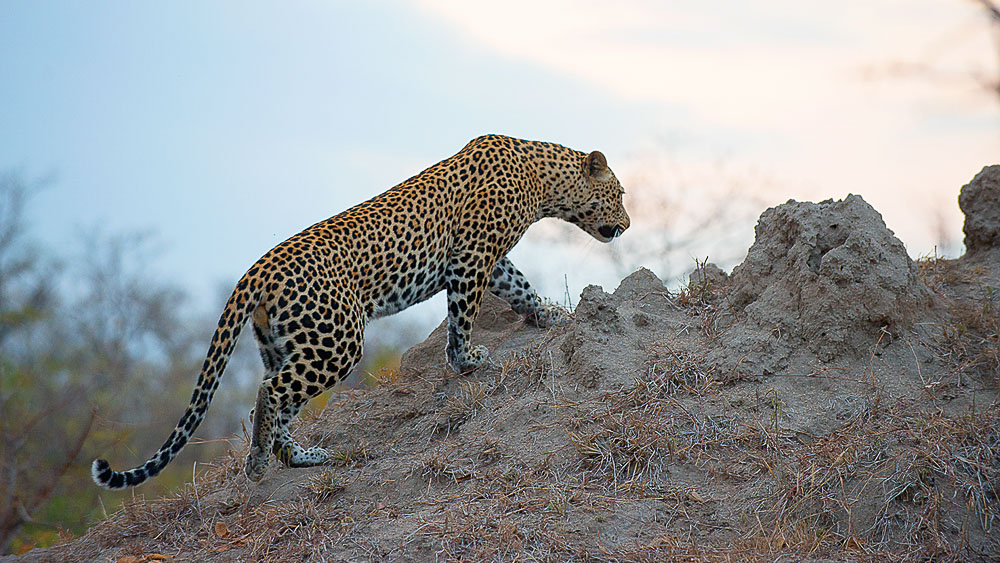
On the way to Kruger National Park! A few routes worth following… from south to north…

Towards Lower Sabie
In the dry season, don’t hesitate to spend a good while at Sunset waterhole. Even overrun with water hyacinths (and tourists…), it remains a place where anything can happen. You can stay until the very end of the day, as the waterhole is only two minutes from Lower Sabie Rest Camp.
The Lower Sabie region is also known for African wild dogs (Lycaon pictus). With luck, you may come across a pack late in the day. Stay on the main road to or from Crocodile Bridge — these wild dogs favour comfort and find it easier to walk the track than push through the bush.
Lower Sabie is our favourite camp!
Quite an old one, in fact (so perhaps less comfortable than others), but full of character, even though the Main Lodge is more recent.
If possible, book a bungalow near the Sabie River, under the sausage trees, and let yourself be lulled by the calls of nearby hippos (watch out for mosquitoes!).
If you’re planning to visit Kruger in August or September, don’t miss the magnificent coral tree standing at the centre of the camp under any circumstances. A sight to behold!

Towards Satara
Although fairly busy, the Satara region is certainly one of the best for observing predators. If you’re staying at Satara, come back as late as possible — you’ll have a good chance of spotting one or more hyenas around the camp.
Tracks not to miss early or late in the day: the S40 heading north, and the loop formed by the H6-S41-S100 tracks in either direction.
Satara is a very large camp (too large for some tastes). Even so, try to book a bungalow in the “G” section, which forms a half-circle of rondavels facing directly onto the bush. Prepare your dinner on the barbecue and bring out a long-range torch — you’ll almost certainly spot a hyena (and perhaps even an aardwolf — in which case you’re exceptionally lucky!).
From Satara to Olifants
Coming from Satara, take the S91 track, 5 km before the bridge over the Olifants River, and stop at the Ngotso River. A small pool of water on the right of the track usually hosts hippopotamuses. It’s an ideal spot to observe them up close, but be careful — behind their clumsy appearance lies a territorial animal that can be highly aggressive.
You can normally reach Olifants via Balule camp, but note that the bridge crossing the Olifants River at this point was destroyed by the floods of February 2000. If it hasn’t been repaired, turn back after watching the hippos, or return to Satara via the S90. This area, made up of vast savannahs dotted with thorn trees, is excellent for spotting cheetahs.
Drive slowly!

Towards Letaba
Like Olifants, Letaba is a superb camp well worth stopping at for lunch at the restaurant overlooking the river. One small detail: the camp staff, and especially those at the restaurant, are exceptionally kind. 🙂
Second detail — if you’re staying at Letaba, try to book a bungalow or tent at the edge of the camp. Some are very close to the fence and, as at Satara, you’ll likely get the chance to see a hyena or two pass by during the evening.
Plan your trip to South Africa
Contact us and start planning your itinerary now — as a couple, with family, or with friends — and see here for examples of tailor-made journeys in South Africa.
See you soon, then, for a safari…