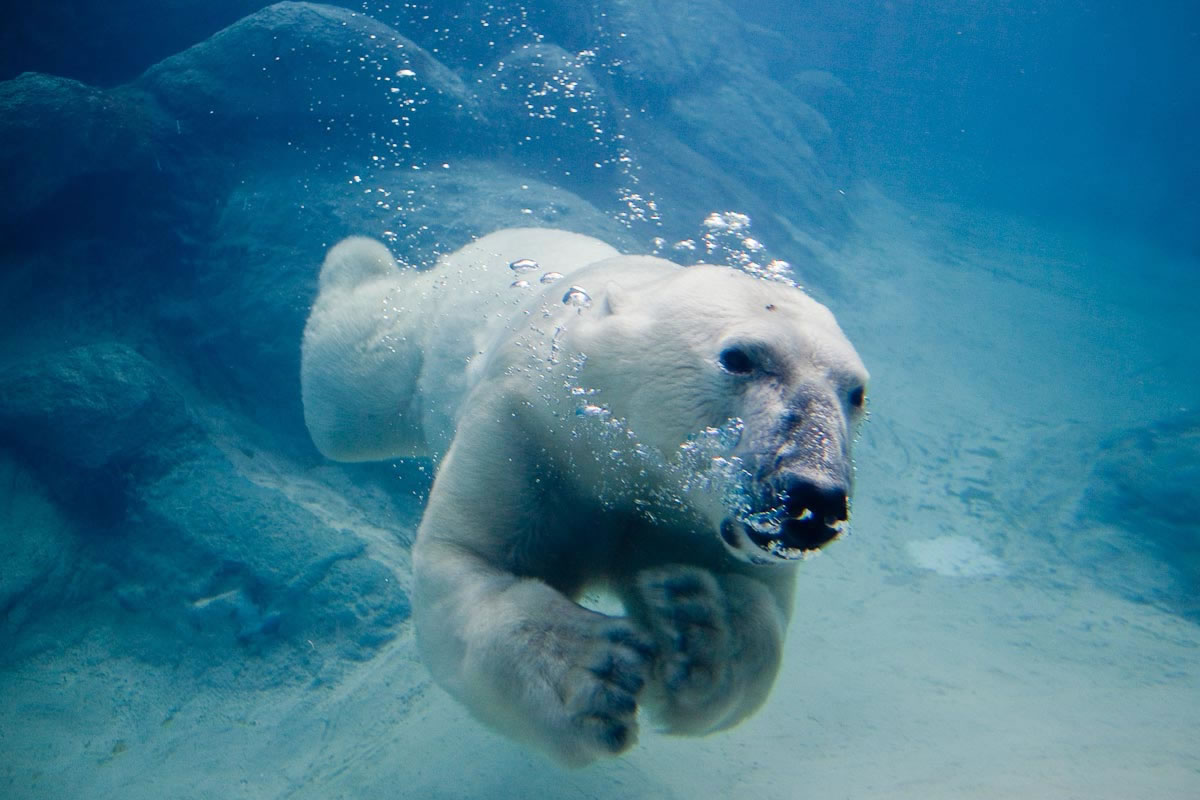
The United States’ proposal to ban international trade in polar bears was rejected at the CITES conference (Convention on International Trade in Endangered Species). The polar bear remains on CITES Appendix II, meaning its trade is strictly regulated but not banned.
This decision is presented by some as a death sentence for the polar bear (Le Monde.fr article) but downplayed by others (Guardian article). Here’s the breakdown:
The IUCN Polar Bear Specialist Group did not support this proposal, considering that such a ban would be unlikely to bring any benefit to polar bear conservation but could have negative socio-economic consequences (for the Inuit population) and on cooperation regarding species management. The WWF also did not support this proposal.
As became clear during the fascinating symposium on polar bears organized in October 2012 by Pôles Actions, the polar bear question is far more complex than what is generally presented in the media, and highly political. Recent, reliable scientific data do not exist for all sub-populations, far from it. Where such data do exist, they sometimes show a decline, but sometimes a stable level or even an increase in certain sub-populations. It is the Inuit who would have been most affected by a ban on international trade in polar bears, even though they are already bearing the full brunt of the consequences of global warming — a phenomenon they did not contribute to creating.
The urgent priority for polar bear conservation is to act against the global warming that is driving the loss of its habitat, and to obtain current, reliable and complete data on the entire polar bear population in order to establish a coordinated management plan.