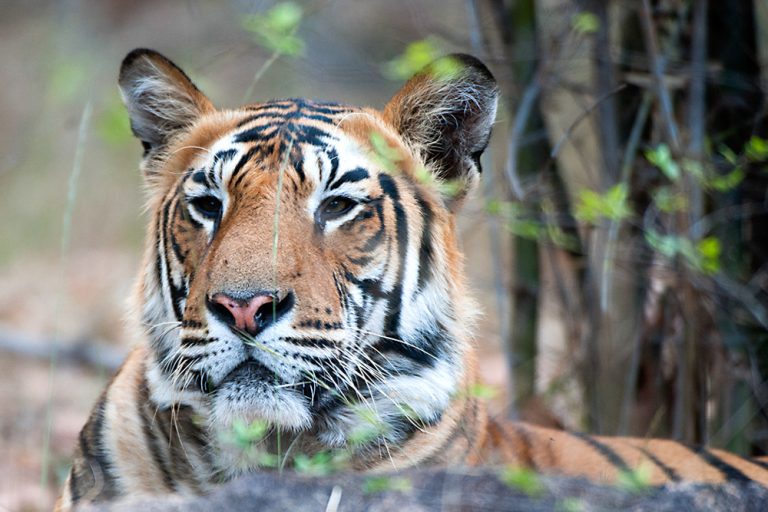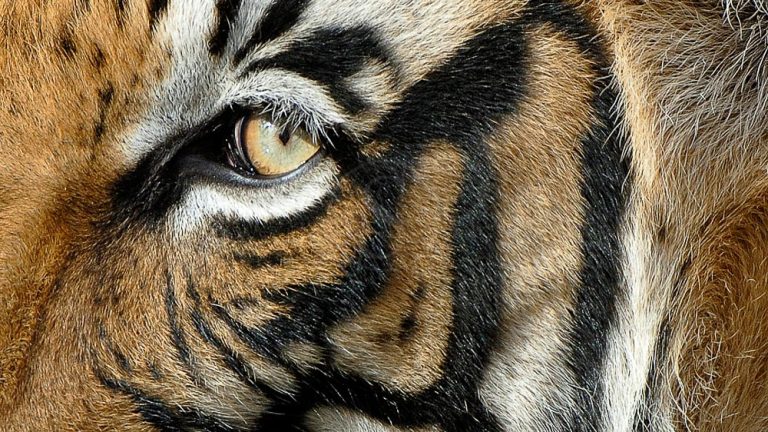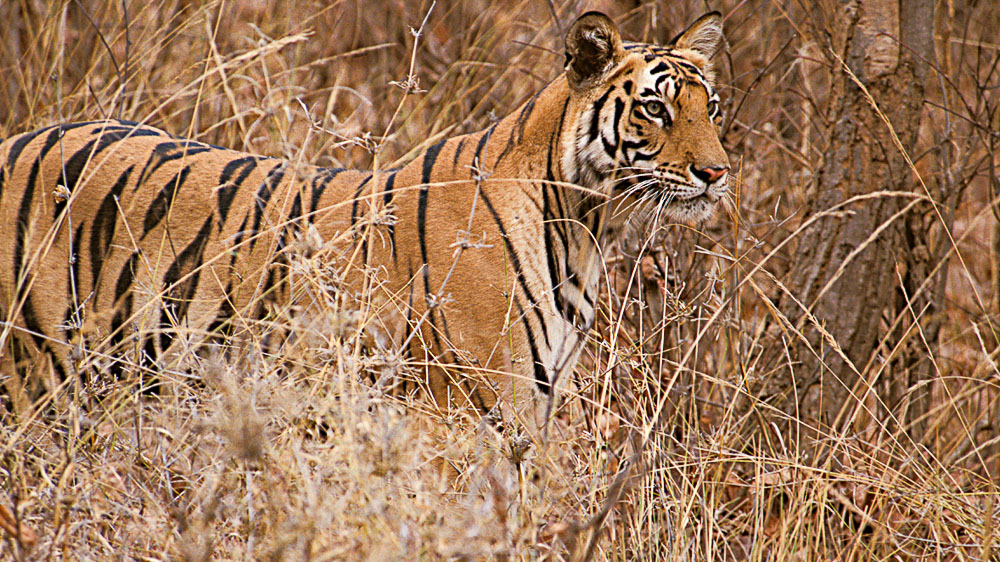
The Indian jungle is not particularly well suited to photography. And yet the tiger is one of the most fascinating subjects to photograph.
With a notable lack of light and often little stability, conditions can hardly be called ideal for getting the shot!
The photographer’s posture and the choice of equipment have never been as crucial as in these moments.
In India, safaris are organised by 4×4 and, in certain reserves, on elephant back. Once perched on the latter, comfort can be considered relative at best, and balance certainly unsteady. Nevertheless, it remains the most effective way to spot tigers in terrain too rugged and uneven for jeeps.
Elephants have the added advantage of allowing a closer approach to the animals without startling them.
Long focal lengths therefore become unnecessary. Be mindful of the downward angle, which becomes significant when you are very close to the animal. Wait for a more favourable position before shooting.

Tiger Safari in India © Alain Pons
Lenses
From the 4×4: 500 mm at wide aperture.
From elephant back: Nikon 80/400 or Canon 100/400 stabilised.
A 28/70 for wider shots.
Accessories
– Beanbag to rest your lens on the window edge when in the vehicle
– Dust-proof, shock-resistant bag to protect equipment inside the 4×4
– Waterproof box to store your film or memory cards
– Slightly damp cloths to wipe away dust and protect lenses
– Blower brush to remove dust from the lenses
– Binoculars (bright optics)
Fact sheet No. 1 – Equipment for a photo safari in Africa
An encounter with His Majesty the tiger, in India