The Amazon of the seas, the rainbow of biodiversity… Superlatives abound to describe what many call a glimpse of paradise!
Welcome to the Raja Ampat archipelago in Indonesia.
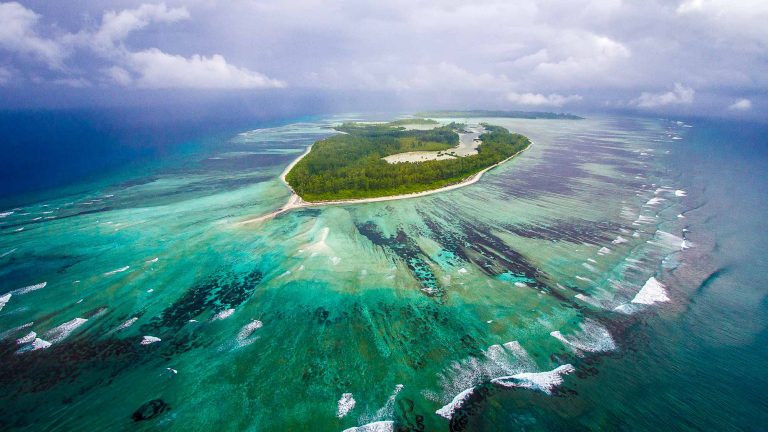
Wind and sea have carved out striking landscapes both above and below the water. Above, lush, mist-wrapped forests cover the tips of karst formations.
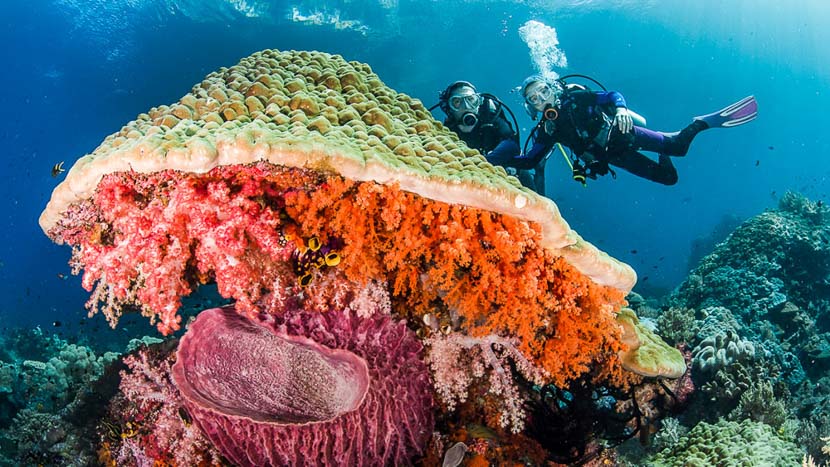
Below, a temple of diversity. This string of islands sits at the heart of the Coral Triangle, a marine area spanning six million square kilometres that holds no less than 80% of the world’s marine biodiversity.
Yes, you read that right. 80%! Do you grasp what that means?
Consider that three-quarters of the world’s corals are found in Raja Ampat — ten times more than in the Caribbean. Consider that its marine fauna counts more than two thousand different species of fish inhabiting its reefs. Consider that six of the world’s seven sea turtle species swim in the waters around its islands. By now you’ll understand: this epicentre of marine biodiversity lives up to its name. Everything here is more varied, more abundant, more colourful, more teeming, more remarkable than anywhere else. In fact, is there even a reason to look elsewhere if it’s all concentrated right here? In this living tableau — this exhilarating congestion of life, really — the sheer abundance is captivating. The spell takes hold. Paradise or truth? A strange sensation, floating between dream and reality.
If you manage to lift your head above water, you’ll realise this is one of the rare places on Earth where biodiversity is improving rather than declining.
But it is also a quiet love story. Fifteen years ago, Misool Eco Resort was born from the vision of two diving enthusiasts determined to protect this singular environment. A responsible ecotourism resort where commitment is exemplary: built entirely from reclaimed wood and coconut-fibre insulation, the property runs on a natural wastewater filtration system, and waste is recycled on site.
Alongside the resort, they also established a marine reserve around the site. All fishing of aquarium fish, sharks, manta rays and turtles is prohibited there. Their project is simple, but they cannot carry it out alone. Marine protection cannot succeed without the involvement of local communities. Today, the virtuous circle is working. The community is convinced of the importance of preserving the ecosystem and the reef, as it benefits directly from this sustainable tourism activity. Misool Eco Resort received the Tourism for Tomorrow Award in the “Environment” category — an international distinction recognising the best responsible tourism projects dedicated to protecting the environment. A benchmark.
The great triumph of dreamers.