Uganda, “the pearl of Africa” as Churchill liked to call it. It is not without reason that this remote region of the Rift Valley so fascinated Europeans. It is the extraordinary richness of life and breathtaking landscapes that earned this verdant country such a passionate name.

A natural treasure
Uganda, the African Great Lakes region, the Rift Valley. The mere mention of this legendary region of East Africa evokes a certain scent of adventure, and reminds us that it was in this still little-known part of the African continent that the extraordinary human odyssey first took root.
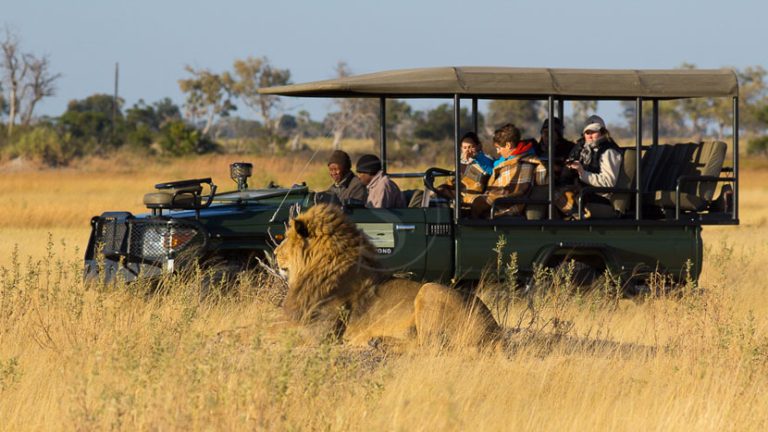
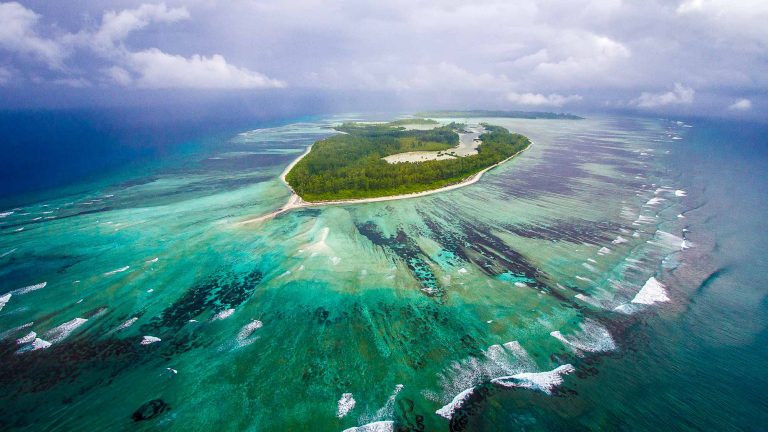
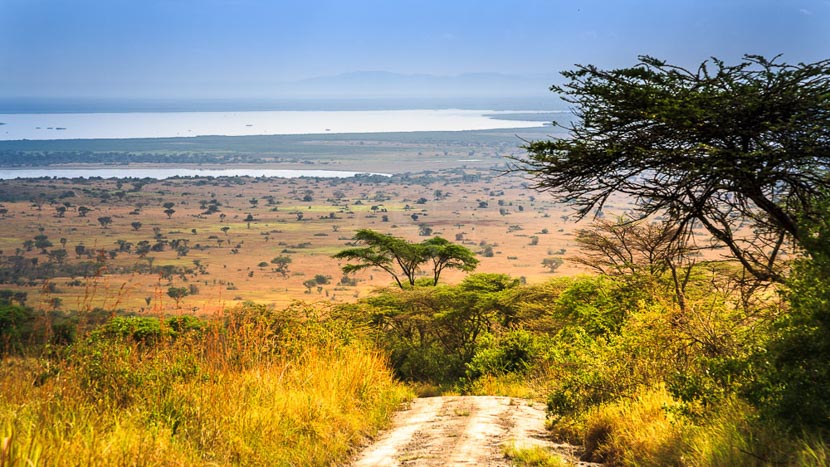
Straddling the Equator and lying across the western and eastern branches of the African Rift Valley, Uganda is a country of rugged highlands rising above 1,000 metres, covered in shrub savannah and carefully cultivated fertile hills, interspersed with lakes and wetlands that form a vast trough cradling the immense Lake Victoria and Lake Kyoga. To the west of this modest-sized state, the Rwenzori massif — the famous “Mountains of the Moon” with their snow-capped peaks — rises majestically above 4,500 metres along the Congolese border, while the volcanic cone of Mount Elgon, reaching 4,321 metres in the east, and the crystalline massifs in the northeast have shaped the borders with Kenya and Sudan. In the southern and southwestern territories, volcanoes, crater lakes, snow-capped mountains, green hills, and primary rainforest form a reservoir of extraordinary biodiversity. Within these dense, at times impenetrable, lands, the sheer abundance of life draws the most adventurous naturalists, who come to observe mountain gorillas, chimpanzees, hundreds of species of wild birds — several dozen of them endemic to the Rift Valley — and freshwater fish. Due to the altitude, southern Uganda enjoys a very humid climate of around 20°C, while the north of the country experiences a hot, dry climate close to 30°C. The country has two dry seasons, from January to March and from June to September.
Uganda is slowly healing its old wounds and is establishing itself as a new ecotourism destination, cautiously and sensibly developing a form of tourism that respects its incomparable natural wealth… We hope so, and I like to believe it.
Over there…
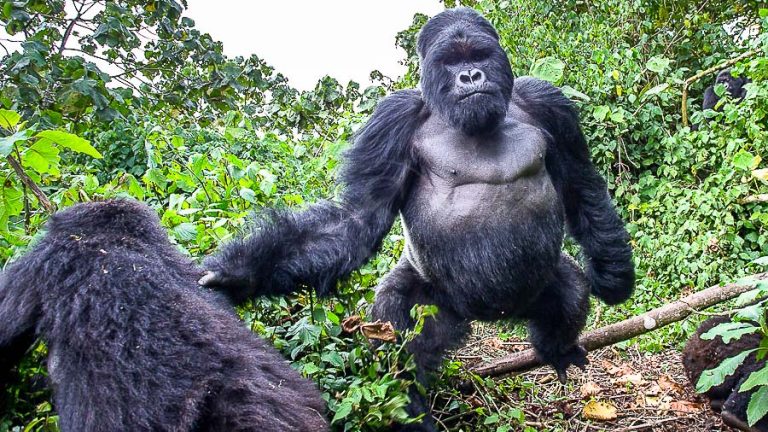
To travel there is to journey off the beaten track, following in the footsteps of the early British explorers in search of the sources of the Nile, the majestic Lake Victoria. It is also to have the rare privilege of encountering mountain gorillas and chimpanzees in their natural habitat, deep within the dense rainforest, or to observe the hundreds of species of wild birds found across the territory. It also means venturing into the heart of the Rwenzori range to the west, climbing Mount Stanley at 5,110 metres, or exploring the many national parks scattered across the country — among the most extraordinary in Africa — such as Queen Elizabeth National Park in the southwest, designated a UNESCO Biosphere Reserve.
To travel there is to show humility before a nature that is rich yet fragile in its balance, a living testament to the colossal tectonic forces that shaped it.
Pascal Picq, paleoanthropologist, once said…
“Man did not descend from apes. We know that evolution did not proceed in successive stages. Apes evolved alongside us. They are neither more nor less evolved than we are. Chimpanzees and bonobos are closer to us than gorillas. In terms of family, this means they are our brothers, and that gorillas are our cousins. We — chimpanzees, bonobos, and humans — share a last common ancestor from which we diverged in Africa around 6 or 7 million years ago. If we look at what we have observed in chimpanzees over the past 30 years, we see that everything we once believed to be exclusively human adaptations — bipedalism, tool use, hunting, food sharing, sexuality, social systems, laughter, consciousness, empathy, sympathy — chimpanzees display as well. So either they acquired all of this independently, or it comes from our last common ancestor, which is far more plausible. This means that already in the world of the forests, 6 to 7 million years ago, all these traits we thought were uniquely human existed and form part of a shared ancestral heritage.” (Interview with Pascal Picq, for RFI 2000 / Source: http://www.hominides.com)
Great apes under threat
Habitat destruction by humans remains the leading cause of species decline. Great apes are no exception to this rule, and despite warnings raised by scientists and primatologists worldwide, their green forests continue to shrink dramatically. Compounding this threat are other, less glorious realities: poaching (often a complex reflection of humanitarian hardship among local populations), illegal capture of the youngest individuals — frequently resulting in the killing of their parents — destined for certain circuses, zoos, or medical experimentation on primates. Other, more sporadic natural causes can also explain sudden collapses in great ape populations, notably the Ebola virus, which can wipe out up to 80% or even 90% of a gorilla population.
Perhaps the most effective way to prevent, or at least slow, the extinction of great apes remains the fight against ignorance and the persistent prejudices still held toward our remarkable cousins.
Let us not stop reading, understanding, explaining, and sharing the links below to raise awareness among those close to us and beyond:
– GRASP (the Great Apes Survival Project), launched by the United Nations in 2001. It brings together 23 African and Asian countries and funds protection, research, and local awareness initiatives for the survival of great apes.
– The Jane Goodall Institute and the Dian Fossey Foundation: these institutes fund on-the-ground action dedicated to gorillas and chimpanzees.
– The Paniscus association for the protection of bonobos.
– The Orangutan Foundation International for the protection of orangutans.
– The SFDP (Société Francophone De Primatologie)
Further reading…
– “Grands singes”, Cyril Ruoso, Emmanuelle Grundmann, Ed. Empreintes & Territoires
– “Etre singe”, Cyril Ruoso, Emmanuelle Grundmann, Ed. La Martinière
– “Les grands singes, ou l’humanité au fond des yeux”, a collective work by Pascal Picq, Dominique Lestel, Vinciane Despret, Chris Herzfeld.
– “L’Ouganda contemporain”, Gérard Prunier and Bernard Calas
Meeting the great apes… yes, but with the utmost respect
Meeting these animals… yes, but not just anyhow or at any time. This is the commitment the Étendues Sauvages team upholds in offering you a rare experience:
Meeting chimpanzees and gorillas in Uganda. And get in touch with us with any questions!
“An animal is not a machine. Great apes are like us — they suffer, they have feelings, empathy…” (Pascal Picq)
Share your experience or leave a comment below in response to this article.