“The importance of mangroves is well known, but there has never been such a comprehensive review of these essential ecosystems. This book should change the way we see and manage mangroves, for the benefit of coastal communities and biodiversity worldwide.”
Achim Steiner, Executive Director, United Nations Environment Programme
Mangrove: a stand of vegetation, mainly woody (mangrove trees), that grows in the intertidal zone known as the foreshore, along the low-lying coasts of tropical regions.
Mangroves offer several beneficial characteristics:
– they provide significant resources for the populations living along these coasts.
– they are among the most productive ecosystems in biomass on the planet
– they act as effective stabilizers for certain fragile coastal areas
– they contribute to ecosystem resilience, particularly against the effects of climate change (rising sea levels, erosion).
Mangrove ecosystems are unique. Tens of millions of people depend on mangrove forests. 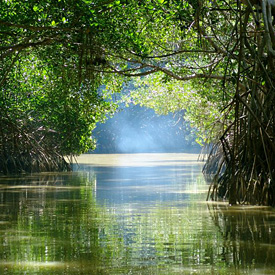 It is currently estimated that around 55% of the world’s population lives in coastal areas and makes extensive use of coastal and marine ecosystems to meet their various needs (food, housing construction, etc.).
Mangroves trace their interlacing shapes mainly in Australia, Indonesia, Malaysia, the Philippines, the United States and India. But they also extend across South America (Panama, Mexico, Venezuela, Cuba, Colombia) and Africa (Madagascar).
The conservation of mangroves is therefore essential not only to the survival of coral reefs and seagrass beds, but also to humankind.