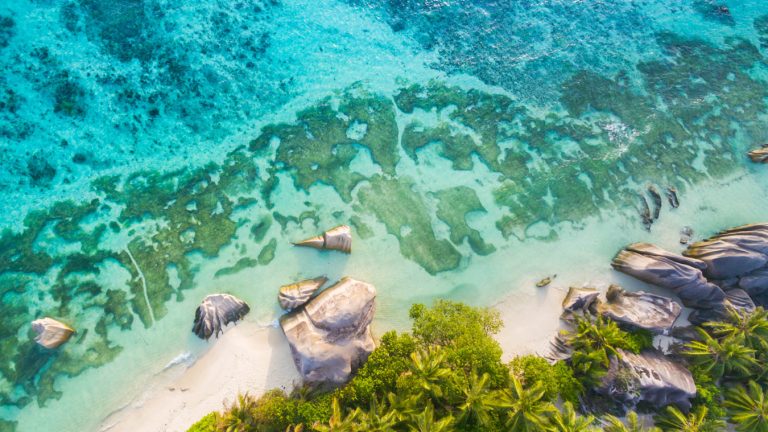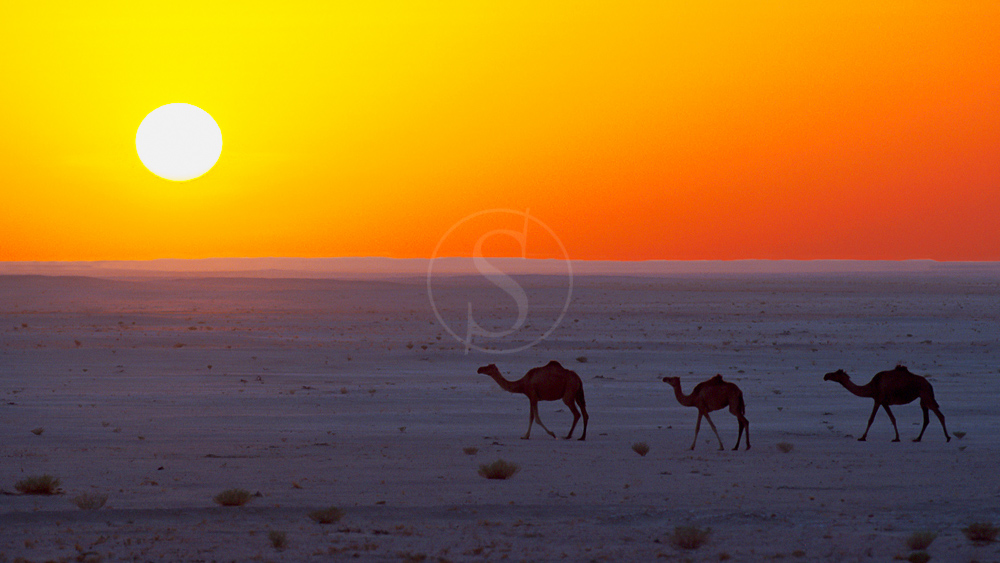
… an ocre dune desert, lush oases, cities with remarkable architecture, villages perched on high plateaus, fjords, dromedary caravans and hundreds of kilometres of sandy beaches?
A clue: according to legend, it is the birthplace of Sindbad the Sailor. A land worthy of the Thousand and One Nights, ruled by a Sultan.
It is the Sultanate of Oman.
For the traveller, this little-known country holds an astonishing wealth:
the traditional villages of the high plateaus, such as Jebel Akhdar,

the capital Muscat,

the ocre sand dunes of Wahiba,

the oases hidden in the narrow valleys of Wadi Shab and Wadi Twi,

the high-altitude plateaus,

the fjords, the beaches, the fishing villages and the luxury of the Six Senses hotel on the Musandam peninsula

This country owes much of its cultural wealth to the strategic position it has always held, at the crossroads of historic and present-day maritime trade routes.
Located at the extreme southeast of the Arabian Peninsula and also controlling the southern shore of the Strait of Hormuz, bordered by the Gulf of Oman and the Arabian Sea, the Sultanate of Oman was an essential staging post on the Incense Route between the 3rd century BC and the 2nd century AD, a route that linked Egypt to India. It was also an important stop on the Maritime Silk Road. Today, the Sultanate of Oman sits on the world’s most strategic shipping lane, the Strait of Hormuz, which controls access to the Persian Gulf and sees a third of the world’s oil production pass through it each year.
The Sultanate of Oman was part of the Persian Empire from 536 BC. It experienced partial occupation by the Portuguese for 150 years, from 1507 to 1650. It has been independent since the mid-18th century. However, from 1891 to 1971, while officially retaining its independence, the country was in fact placed under British protectorate. During the country’s golden age, in the early 19th century, the Sultanate of Oman built a veritable colonial empire stretching from Balochistan to Zanzibar, prospering through the slave and spice trades. All these influences combine to create a remarkable cultural heritage.
It is a country of great tolerance. The dominant religion among its 3 million inhabitants, 700,000 of whom are foreign nationals, is Ibadi Islam, the third branch of Islam. Sultan Qaboos, who has reigned since 1970, began a slow process of democratic opening long ago, instituting universal suffrage in 2003.
The prosperity of this country of roughly 300,000 km² rests on oil. However, its reserves are limited, and priority is now given to luxury tourism to diversify the economy. The Sultanate of Oman is one of the ten countries to have recorded the strongest economic growth since 1970.

The Sultanate of Oman, calm and still largely unspoiled, is a country of varied and remarkable landscapes. Discover it…