We have been designing your journeys for nearly twenty-five years now, and you have placed your trust in us throughout all these years.
So yes, since 2000, things have clearly changed and evolved. We no longer travel in quite the same way.
On the other hand, one thing has not changed. It has in fact grown stronger, and continues to do so every day.
It is our determination to uphold the values that have driven Étendues Sauvages since its founding:
• moving away from mass tourism, now often called “overtourism” — a term that may sound less pejorative, but is just as damaging.
• ensuring your journeys bring immediate, direct benefit to local populations, through the numerous programmes run by our local partners in the remote regions you visit.
• protecting wildlife and the environment by working with professionals who share this vision, and selecting accommodations committed to sustainability and respect for nature.While quality and excellence of service — before, during and after your trip — remain the watchwords of our commitment, the authenticity of our approach and genuine care are equally important pillars for us.We also continue to stand by our truly “tailor-made” approach — 100% human.
It is not a platform or an algorithm that answers your expectations, but a team of travel experts who know you and whom you trust.
And because they have a thorough command of the destinations they offer you to discover, they craft for you the finest of journeys

EARTH
NAMIBIA, THE SYMPHONY OF THE SINGING DUNES
Marco Polo himself described these “singing sands” as a concert of drums and cymbals.
The Bedouins attribute these sounds to djinns, the invisible spirits that populate desert legends.
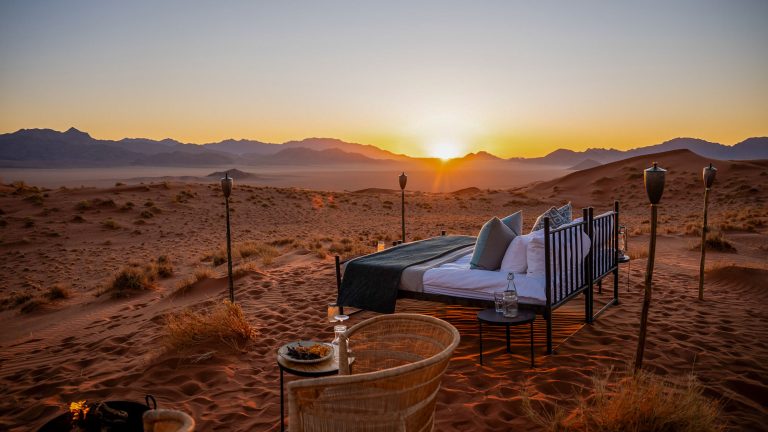
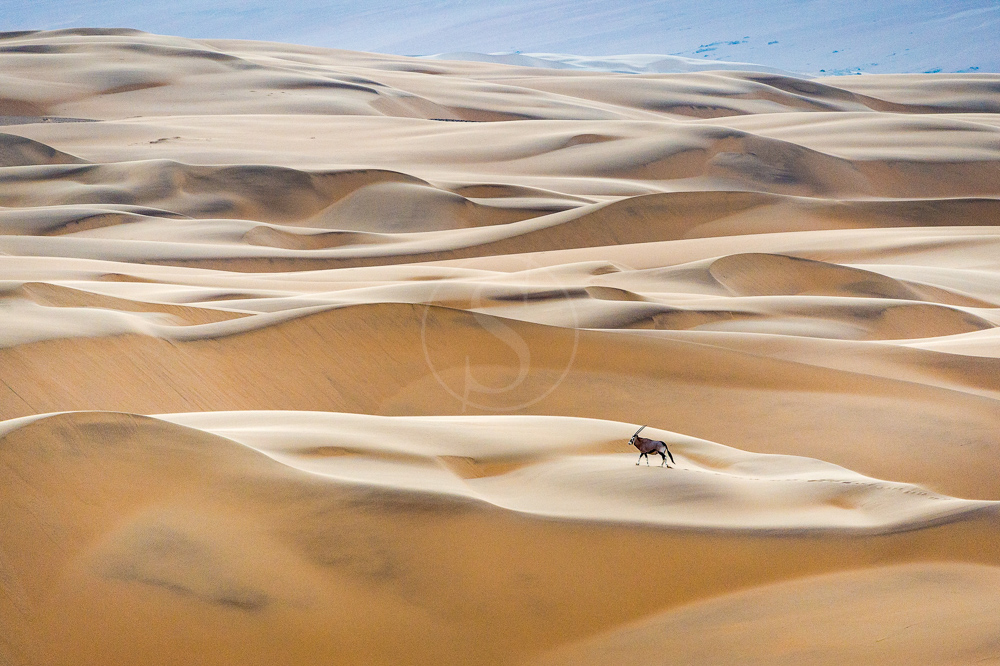
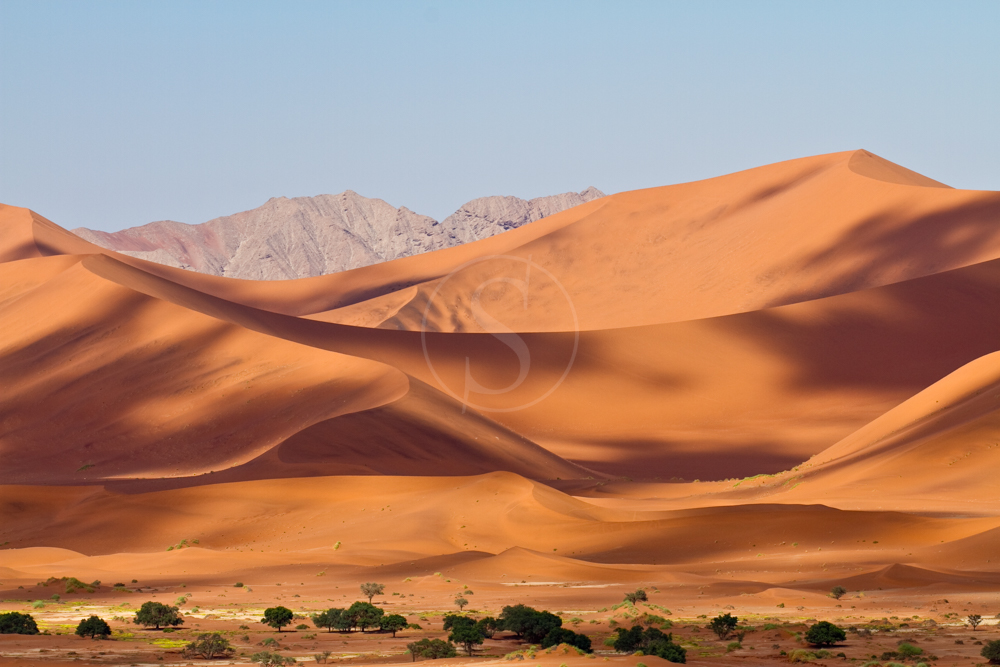
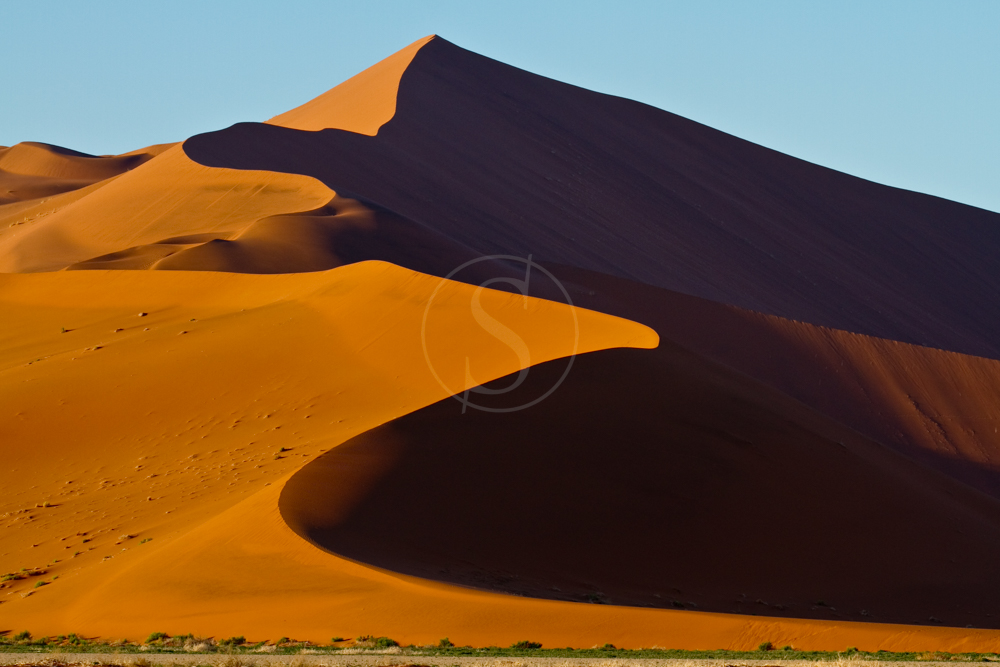
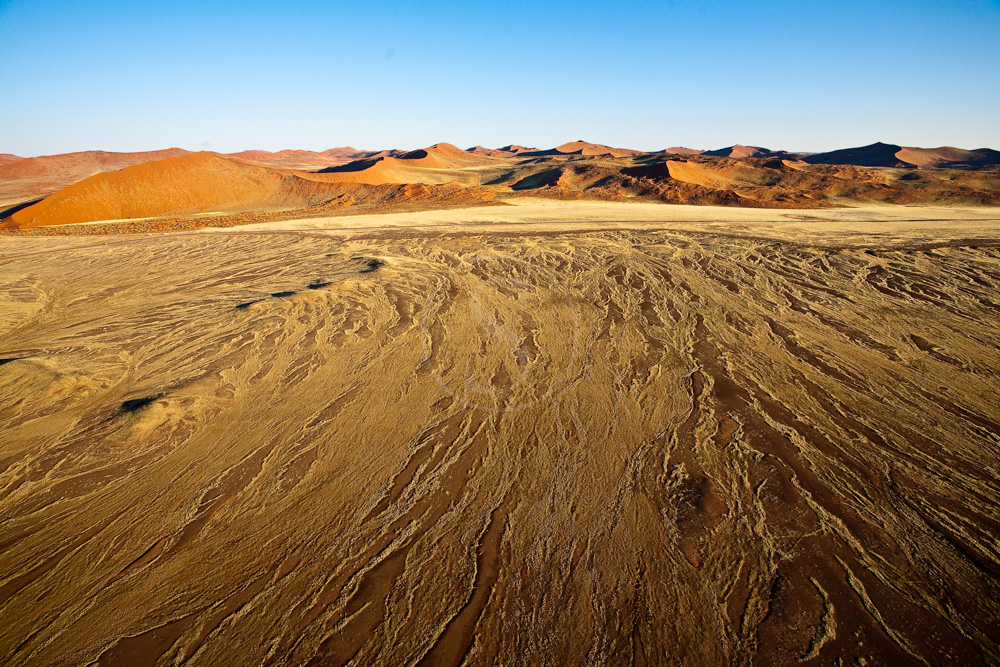
The singing dunes of Sossusvlei, in Namibia’s Namib-Naukluft Park, offer an unforgettable sensory experience.The spectacle begins at dawn.
The dunes, like petrified waves of perfect geometry, light up in shifting colours, moving from scorched copper to a kaleidoscope of pink, gold and red-orange.
This magical moment is the overture of the symphony.
Light plays the role of conductor, directing shadows and colours in a silent ballet.The singing dunes are the lead instruments of this melody.
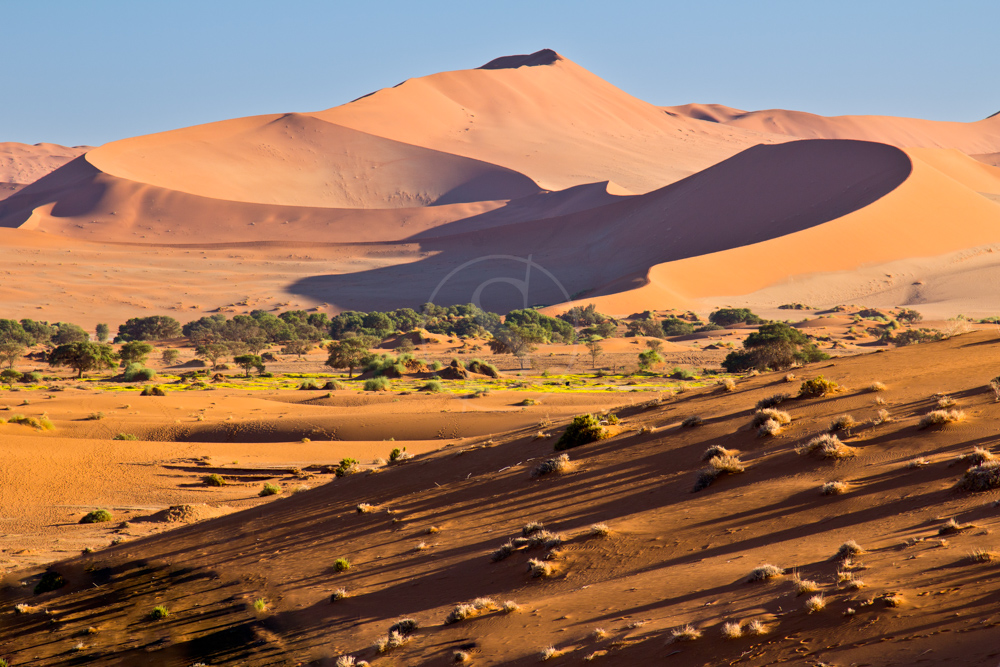
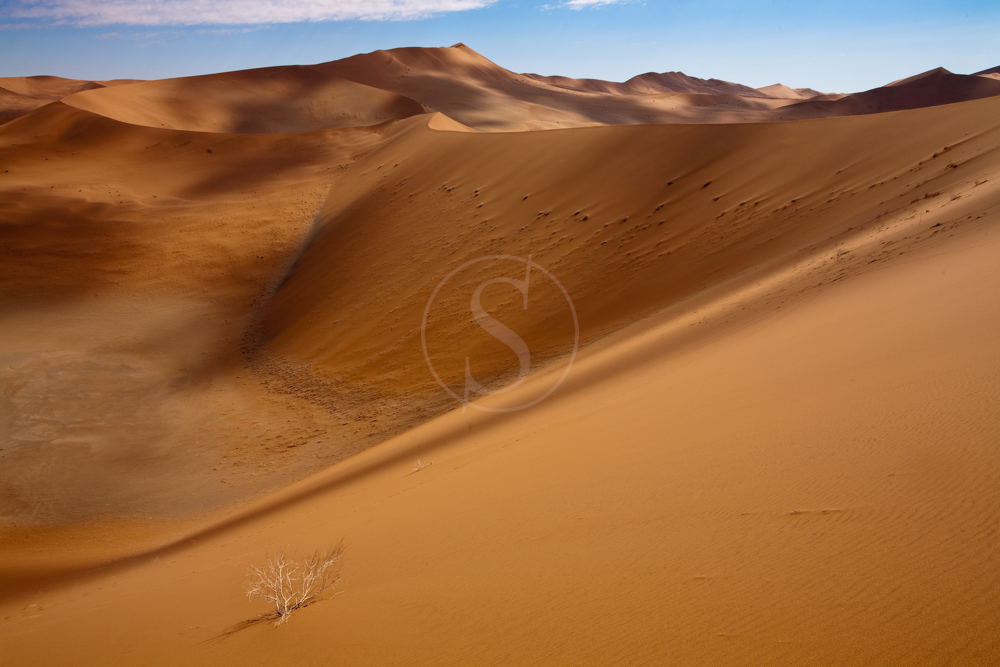
Their music arises from the friction of sand grains against one another, set off by natural avalanches or ones triggered by the wind.
Each dune has its own fundamental frequency, typically between 60 and 105 Hz, comparable to the register of the human voice.
The sounds produced are powerful and can be heard for several kilometres around.When the wind blows hard enough, building to a crescendo, an avalanche is triggered on the steepest face of the dunes.This is when the symphony reaches its climax.
The sand grains move in perfect cadence, producing synchronous vibrations that resonate through the air like the membrane of a loudspeaker.
This phenomenon creates a deep, vibrating drone that fills the air with an almost palpable energy.In this desert symphony, the animals are the soloists.
Majestic oryx cross the dunes with grace, while jackals and hyenas add their own notes to the soundscape.
Even the dune-dwelling insects quietly take part in this natural harmony.The day ends with one final, spectacular act.
As the sun slowly sinks below the horizon, the dunes take on a golden hue.
This is the finale.
The conductor bows, the light fades.
The song of the dunes gradually dies away, giving way to the silence of the desert.
The musicians are tired.
It is a moment of absolute calm, in which one can feel the full majesty and serenity of this unique environment.Next performance tomorrow. Same time.
© Wilderness Safaris, Étendues Sauvages
AUSTRALIA, AYERS ROCK, ABORIGINAL LEGENDS
I am falling.
I cannot put it any better.
I am falling.
Rather fast, too.
And it does not bother me at all.
Quite the opposite — I love it!
I should mention that I am not falling just any old way.
I have just jumped out of a plane mid-flight.
One that was working perfectly well, mad as I am.
I am not quite taking it in.
I am some 3,000 metres above the ground.
I am wearing a parachute. Nor am I falling just anywhere.
I am hurtling at about 180 km/h towards red-orange rocks.
They seem to grow larger as I fall.
I realise they are, in fact, enormous rock formations in the Australian outback.
Beside them, Mount Connor stands proudly and Lake Amadeus spreads out in a sharp blue. These are Kata Tjuta and Uluru — Ayers Rock. Little by little my panoramic view fades.
The more I fall, the more I fix my gaze on Uluru.
The seconds pass and I see nothing else. Uluru is without doubt Australia’s most famous rock. Perhaps the world’s. 3 km long, 9 km in circumference, 348 metres high.
Over the years, wind, rain and temperature changes have helped shape this rock, which extends more than 5 km underground.
This monolith could well trip up giants.
That is what happened during the “Dreamtime”, when metaphysical beings created the world, roaming the planet to shape its landforms, waterways and rocks.
I keep falling.
And clouds are forming above me.

Uluru is a site traversed by the ancestors.
The marks on the rocks are traces they left behind, and so carry a particularly sacred character.
The cracks and caverns correspond to the places where Alinga, the lizard man, tried to retrieve his boomerang lodged in the rock. The ground is drawing closer. Arrival is imminent. As is the rain. The Anangu Aboriginal people believe that the spirit of their ancestors is still present in these places, which hold deep religious significance.
This mountain is not like the others.
It is alive and can take revenge if desecrated. It is therefore closed to the public.
Uluru has reclaimed its place as a sanctuary, one that can only be observed from a distance.I finally land.Today Uluru is happy.
Rain, usually scarce, pours down heavily on the rock.
Countless waterfalls and cascades form and flow from its summit.
Uluru changes colour, shifting from orange to a playful violet.I have two hours to enjoy this memorable spectacle.
Before everything returns to the way it was.I realise how fortunate I am.
Very few travellers have been granted such an extraordinary welcome.
© Shutterstock
TANZANIA, THE NIGHT I MET LENGAI
The sky was ablaze with intense red when I began the ascent of Ol Doinyo Lengai. My Maasai guide, Namelok, had warned me: “The Mountain of God is not climbed — it invites you.”
Night fell quickly in Tanzania, wrapping the volcano in a cloak of darkness. Only the glow of our headlamps lit the steep path. The ground, unstable beneath our feet, seemed alive, as if the mountain itself were breathing. Halfway up, a sharp smell of sulphur filled the air.
Namelok stopped abruptly. “Lengai is restless tonight,” he murmured.
A deep rumble echoed from the bowels of the earth, making every fibre of my body vibrate.
Suddenly, a flow of black lava burst forth just metres from us, lighting the night with a ghostly glow. Contrary to what I had imagined, it did not glow red, but flowed like dark oil. Strangely, it lightened in colour as it cooled. Exhausted by the climb and the altitude, I dozed off near the summit.
That is when Lengai appeared to me.

Not as the wrathful god I had pictured, but in the form of an old Maasai man, his wrinkled face reflecting the wisdom of ages.
“Why do you climb my dwelling, stranger?” he asked, in a voice that seemed to come from the mountain itself.
“To understand,” I answered simply.
He smiled, revealing teeth as white as volcanic ash.
“Understand what? Nature? Mankind? Or yourself?” Before I could answer, the ground shook violently.
I woke with a start, heart pounding. Dawn was breaking on the horizon, bathing the landscape in an unreal light.
Namelok was looking at me, an enigmatic smile on his lips. “Lengai has spoken to you,” he said. It was not a question.
My body, covered in white dust, bore witness to my mystical experience. As we began our descent, I realised that Ol Doinyo Lengai had changed me. Was it the encounter with Lengai, or simply the majesty of this singular volcano?
I will never truly know.
One thing was certain: the Mountain of God jealously guards its secrets, revealing them only to those who dare face it with humility and respect. And I had had the privilege of glimpsing a fragment of its mysterious wisdom.
© andBeyond, Nomad Tanzania

FIRE
PERU, TREKKING THE SACRED VALLEY
Since I was young, I have dreamed of walking in the footsteps of the Incas.
From the splendours of the Sacred Valley to sprawling Lima, from the floating islands of Lake Titicaca to the mysteries of Machu Picchu.
A spectacular journey at the heart of a thousand-year-old culture, following the trail of the Inca Empire. Pack on my back, hiking boots on, alpaca hat in place, I am ready for an exceptional escape in the land of the Incas.
My journey begins in Cuzco, capital of Inca culture, at 3,400 metres above sea level. I meet Ricardo, my guide for this Peruvian adventure. He starts by taking me to the local market, where we buy coca leaves to guard against altitude sickness.
We tour the city, but soon leave the Cuzco area behind.
My impatience grows as I anticipate the astonishing beauty of these remarkable sites.
Up at dawn, Ricardo drives me towards Urubamba, known as the Sacred Valley. We begin our trek by exploring the Moray terraces and the Maras salt pans.


I quickly notice how well Peruvians have adapted to their country’s terrain to develop agriculture. The terraces left by the Incas, dedicated to farming, leave a distinctive mark on this majestic landscape.
The geometric perfection of the landscape and the pure mountain air contribute to the unique atmosphere of this place. In this sacred valley, the Moray terraces present a fascinating spectacle, where each tier seems to enjoy its own microclimate.
With every step, my eyes take it all in and my lungs fill with uniquely pure air. Further down the valley, we reach the Maras salt pans. The sight is dazzling, both for its beauty and for the way light reflects off the white salt. A natural wonder that has been used for salt extraction since Inca times.
We meet Mariana, a salt pan worker since the age of eight. According to her, “this place is a blessing from the gods upon our country.” We continue on towards the legendary Machu Picchu, where we cross paths with Aniceto, a potato farmer who explains the origins of this tuber. To my surprise, I learn that this staple crop originated in Peru, where it comes in a remarkable variety of shapes and unusual colours. The walk is hard, even gruelling, but the experience is well worth it.
For me, this trek is an initiatory quest, away from the hustle of daily life. After several hours of walking, I finally catch sight of Machu Picchu!
A true natural wonder. Its history and original purpose remain somewhat mysterious, though it is thought to have been an important centre of knowledge and power for the Incas. The exceptional quality of the stonework and the abundance of ornamentation make it a legendary and spectacular site. Ricardo and I sit down to take in the landscape and absorb the peaceful atmosphere of the place. It is then that Ricardo tells me: “The first time I came here, I was eight years old, with my father. I used to climb on the low walls. Things weren’t as strict as they are now, and we weren’t yet a UNESCO World Heritage Site. This place is so full of good energy that, when we’re here, we feel connected to it.”
Peru unfolds like a living painting, where mythical landscapes blend with ancestral architectural feats.
The agricultural terraces of Moray, true feats of engineering, rise harmoniously along the mountainsides.
The enigmatic Nazca Lines trace their giant patterns across the desert, still defying our understanding.
And what of majestic Machu Picchu, a lost city nestled among the clouds, a silent testament to Inca genius?
Peru thus offers a grand spectacle in which wild nature and human endeavour merge into a dazzling visual symphony, inviting travellers on an endless exploration of its hidden treasures.
© Senderos
COSTA RICA, LAND OF VOLCANOES
Travel journal…
Stage 1: adventure and serenity
From the moment I land in San José, Costa Rica wraps me in its tropical warmth and the promise of adventure.
The Pacuare Lodge lets me know that my day will be defined by water.
My room, surrounded by emerald green, looks out over the forest and the nearby river.
Today, I treat myself to a dose of adrenaline, descending the Pacuare River through vertiginous canyons, intense rapids (Terciopelo Snake) and impressive waterfalls (Huacas). Everything goes smoothly.
But my adrenaline levels hit a record high!
Things calm down in the natural hot springs of Orosi, where thermal waters soothe my tired muscles.
Stage 2: at the heart of the craters
My heart beats to the rhythm of the volcanoes that populate this untamed land.
Consider this: Costa Rica ranks fifth among countries with the highest density of volcanoes!
The next day, I head to Poás Volcano. Its vast, active crater is a geological marvel.
I gaze at its acidic turquoise waters, mesmerised by the plumes of steam rising from them.
It feels like being on another planet, where nature reigns supreme.
But the best is yet to come. Majestic Arenal. The youngest and proudest of them all.
As I approach, I can almost feel the warm breath of its tumultuous past.
As night falls, I witness an unforgettable natural spectacle: glowing red lava flows light up the dark sky.
An incandescent ballet that leaves me speechless.
Stage 3: serenity and ultimate contentment
While Costa Rica’s nature is often wild, restless and loud, it also calls for calm, reflection and self-exploration.
Returning to one’s roots, to one’s origins, is a promise kept by Origins Lodge.
A true haven of peace, where nature embraces me with all its gentleness and invites me to reconnect with it.
I happily accept the invitation!
Stage 4: the Pacific seen from above
Guanacaste province covers a large part of the Nicoya Peninsula in the country’s north-west, home to Ostional National Park.
A prime location for someone like me, drawn equally to nature and to the sea.
Here, the two come together. Thousands of sea turtles come ashore to nest every year.
Here, the coastline, lined with mangroves, is respected.
The limited direct access to the sea forces hotels to set back on higher ground, in harmony with nature, which gives them a sweeping view over the ocean.I will not hide the fact that I had one simple dream on arriving in Costa Rica: to dip my feet in the Pacific.
Nosara and its beautiful Playa Guiones fulfilled that wish.Here, everything makes sense.

The Pacific, inner peace.As I leave Costa Rica, I find myself deeply moved.
Every volcano, every encounter — the kindness of the Ticos! — has left an indelible mark on my heart.
This country gave me far more than a simple trip: a genuine life lesson.
Costa Rica taught me to slow down, to listen to the whisper of the trees and to respect the rhythm of the earth.
It takes you by the hand and reminds you of what truly matters.
Costa Rica stirs the soul and nourishes the spirit.
It does not simply welcome you.
It transforms you, it inspires you.
And leaves you with an irresistible urge to return…
© Shutterstock
HÁKARL, THE ESSENCE OF ICELAND
In the vast theatre of world flavours, few culinary experiences rival Hákarl.
This dish alone embodies the untamed spirit of Iceland, a land of ice and fire.Eating Hákarl is not just a challenge for the taste buds.
It is a deep immersion into the history and culture of a nation shaped by extreme elements. Hákarl has its roots in ancient Viking tradition, where the need to preserve food to survive harsh winters gave rise to unique techniques.
Greenland shark, an emblematic fish of the icy waters surrounding Iceland, is prepared through a complex fermentation process.
Buried in the ground for several months, then air-dried, it becomes a dish with a powerful, distinctive taste.The smell of Hákarl is the first hurdle to overcome.


It evokes the salty spray of northern storms and the icy breath of glaciers.
You hold your nose, bracing yourself against a scent that seems intent on pushing you away.
But that is the whole beauty of Hákarl.
It challenges you, inviting you to push past your limits.A bite with a sting in every mouthful.
As you bring the morsel to your mouth, it is as if Iceland itself has joined you at the table. The taste is intense, briny, almost sharp.
Every bite tells the story of fishermen who braved stormy seas, and of generations who perfected this unique culinary art.Eating Hákarl means feeling the Icelandic soul.
It means understanding how a people learned to draw on their harsh environment to create something unique.
It is a celebration of human resilience and ingenuity.By sharing this meal with locals, you take part in a ritual that transcends centuries.
You laugh together at the facial expressions this taste inevitably provokes, forging bonds that go beyond words. It is a communion with a culture that values boldness and open-mindedness.As you will have gathered, Hákarl is not simply a dish. It is a sensory adventure that leaves an indelible mark on your memory.
Whenever you think back on this experience, you will be transported to Iceland’s wind-battered shores, where wild nature reigns supreme.Ready to take on the challenge?
© Paul Guillot, Étendues Sauvages

WATER
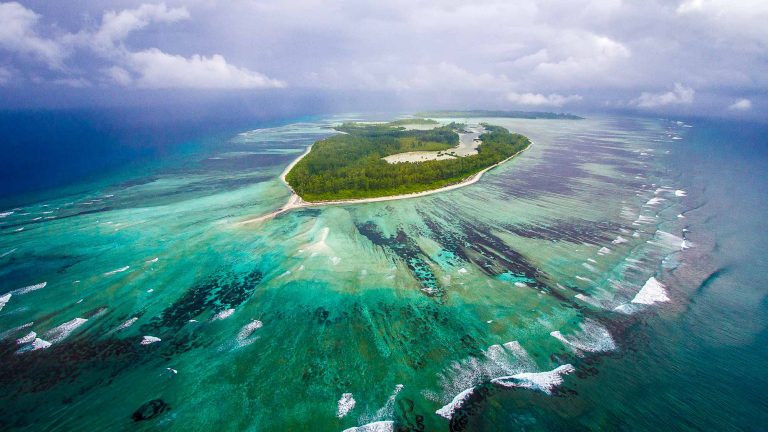
ALPHONSE ISLAND, THE REMOTE ISLE
Among the hidden treasures of our planet, certain secret islands hold a particular charm, as if whispering ancient stories to those who venture there. These islands, often little known, are havens of peace where nature expresses itself in full splendour.
Their promise to travellers is simple: an escape outside of time.
A pause.
They are an invitation to discover what true remoteness really means.
Where every corner tells a unique story.
On Alphonse Island, you are at home.
A sense of freedom is everywhere. Barefoot, in all simplicity. There is no dress code.
Only the soft murmur of waves and the breath of the wind as company.
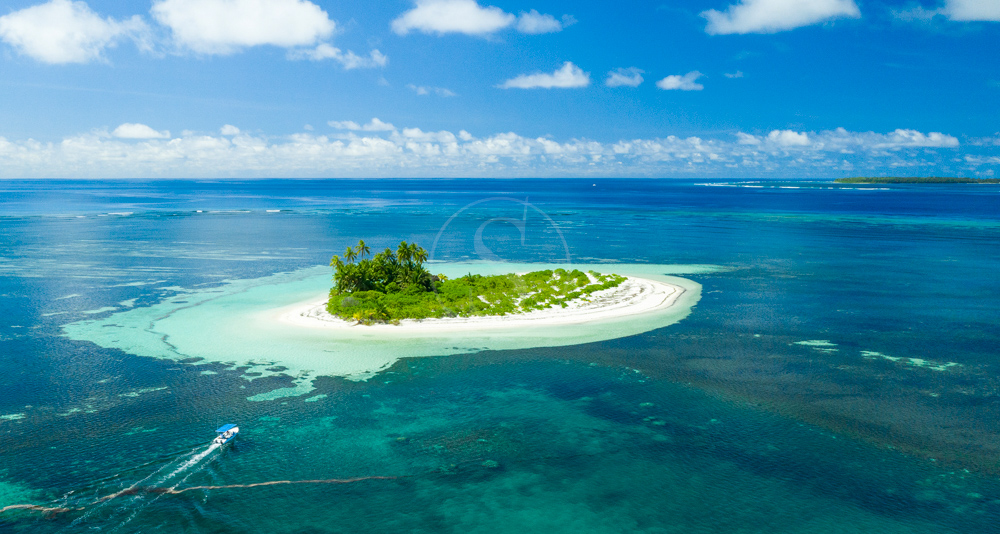
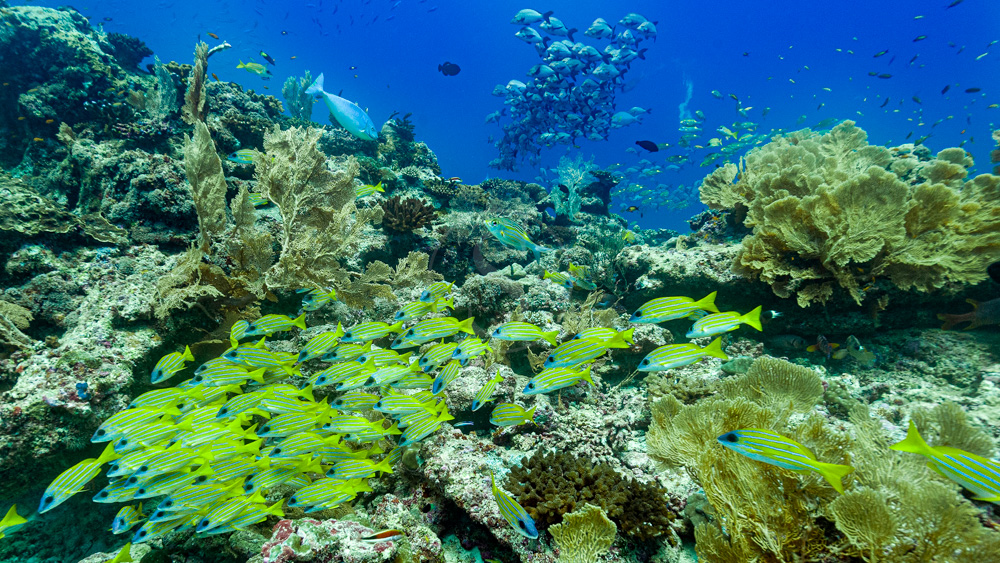
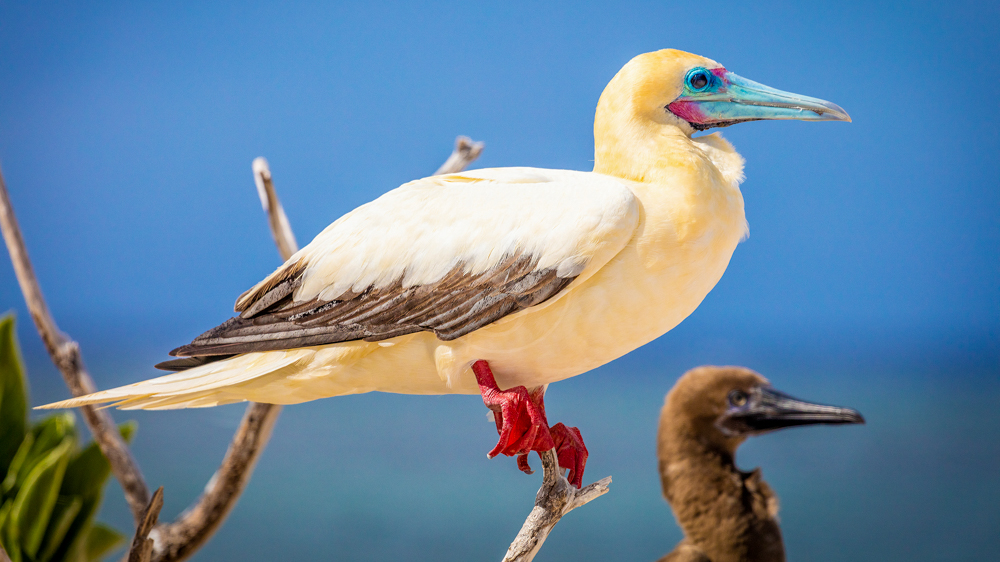
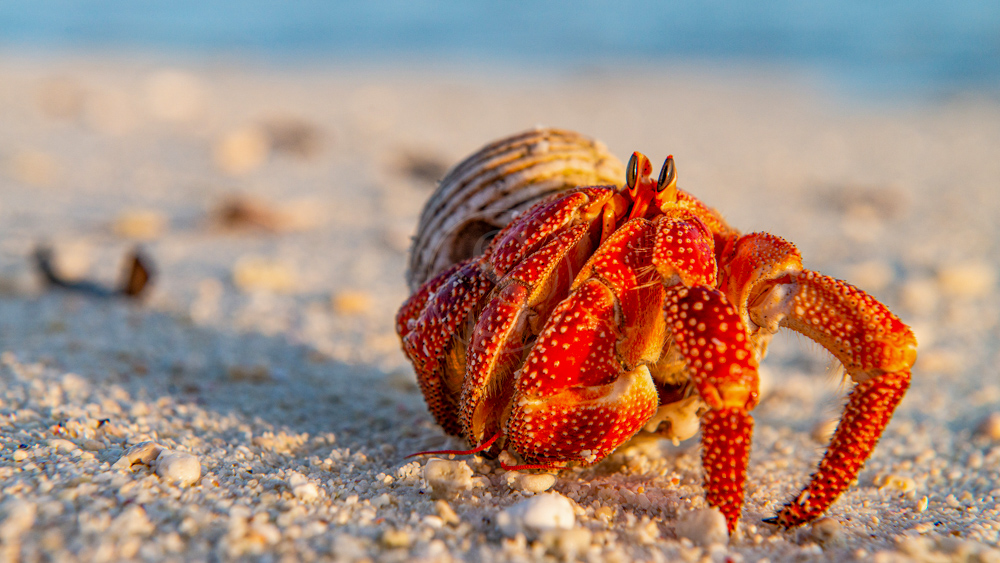
Alphonse Island embodies a majestic solitude, where the vastness of the ocean shapes the contours of a world apart.
The ocean becomes a silent guardian, preserving the authenticity and raw beauty of this singular place.
On its pristine beaches, every sunrise is an intimate spectacle that only those who are there can enjoy.
Enveloped by crystal-clear waters, the island seems to float outside of time, offering an ideal refuge for those seeking to reconnect with themselves and with nature in its purest form.
Alphonse Island is more than a simple destination.
It is a secret elsewhere where every moment becomes a personal legend.
© Blue Safari Collection
OKAVANGO, THE RIVER THAT NEVER REACHES THE SEA
The sun has just woken, and Grandpa and I are already on our way.
On the water at last.
We glide along in a flat-bottomed boat, moving silently through the winding channels of the Okavango Delta in Botswana. Known as “the river that never reaches the sea”, the delta is a labyrinth of water and land where nature reigns supreme. For now, we are making our way through vast carpets of water lilies and tall stands of papyrus. Kabo, our guide, stands at the back. With skill and ease, he handles his long wooden pole, pushing it into the shallow waters as gently as possible so as not to disturb the absolute silence that fills the air.
The boat moves forward quickly, carefully avoiding the deeper waters to keep clear of any bold hippos.But it is fragile — that is its one real drawback! It demands that every sense stay constantly alert. And when I look at Grandpa’s tense face, I can tell that something could happen at any moment.
A louder splash, a sharper cry, something moving in the tall grass, ripples close to the boat — everything triggers a surge of adrenaline. But today, it is elephants we have come to see.
And there they are. For now, they seem tiny against the vastness of the delta.
Still hidden among the reeds and papyrus. We step ashore and approach to observe them without disturbing their calm.Little by little, their presence grows. Their size is both intimidating and fascinating.
They move with surprising grace despite their bulk. Every movement carries a sense of wisdom. I am immediately struck by the texture of their skin.
It is like an ancient map, marked by time.
Every wrinkle tells a story.
I cannot help but look at Grandpa’s face.
After the lion’s mane, now the elephant’s wrinkles. My Grandpa is a zoo all on his own!
Kabo leads us to a large pool where the elephants are taking a mud bath, and above all drinking, on this hot December day.
It is an incredible and rare sight! I feel fortunate.
The giants roll about joyfully in the mud, drink dozens of litres of water, and spray water and dirt all around them.
Grandpa explains that this bath is not just play, but also a way for them to protect themselves from parasites and the scorching sun by absorbing water through the cracks in their skin.
“Look how they’re enjoying themselves,” he says with a smile. “They’re like us — they love the simple pleasures.”
“But, you know, elephants are also very useful to the delta and its ecosystem.
By digging with their powerful trunks to find water, they create vital water points for other animals. And they help disperse seeds that maintain the region’s biodiversity.”
Grandpa also tells me how elephants have survived for centuries thanks to their intelligence and adaptability.
“They are the guardians of this place,” he says with admiration.
I am just as full of admiration for the well of knowledge that is my grandfather. The sun begins to set, and we are still there, silent, watching these giants move with elegance through their natural environment, as we have for ages. We cannot tear ourselves away from this sight.
This moment will stay etched in my memory as a symbol of the raw, wild beauty of the world. I feel deep gratitude for this experience shared with Grandpa.
Just one more, you might say, in this African journey. What luck!
© Étendues Sauvages
MY ENCOUNTER WITH THE ARCTIC WOLF
The quest for the cloud wolves begins with a long journey to northern Canada, the land of the Cree Nation who have always respected them. Then comes the waiting, for it is they who come to us, not the other way round. It lasted 7 long days. And then one morning, there they are, on the ridge, eight sleek wolves trotting lightly in single file. We were fortunate enough to cross their path several times that day. In absolute silence they passed before us, determined, calm and serene, then went off to rest nearby. Far from the image of a strictly hierarchical pack in which each member defends its place with teeth bared, we witnessed an outpouring of warmth and affection.”


Bénédicte: What feelings did you have after this encounter?
“Once back, we felt the need to name them, to keep the memory of each one alive: Avani (earth), the sturdy, scarred mother wolf; Aputika (snow), the pack leader, greyed by the years and almost frail; Mahpiya Luta (red cloud), an imposing male stained with the blood of his last kill; Wompeyappause (white moon), a large wolf with white flanks; Lakota (friend), with the scratch on his muzzle; Kamala (perfection) and Fala (Raven), two young she-wolves; and finally Muna (overflowing spring), the she-wolf under a year old, playful, mischievous, lively and tireless.
These moments still feel unreal to us today. Did they really happen, or was it a dream? It hardly matters, for after such encounters, “one is left fulfilled.”
© Jacques Serre