It’s a strange, penetrating feeling to find beauty and terror side by side on a journey, to feel both dread and reverence, to appreciate stillness and fury at once.
As if water mixed with fire, intense cold with heat, paradise with hell.
And if paradise exists, hell can’t be far off.
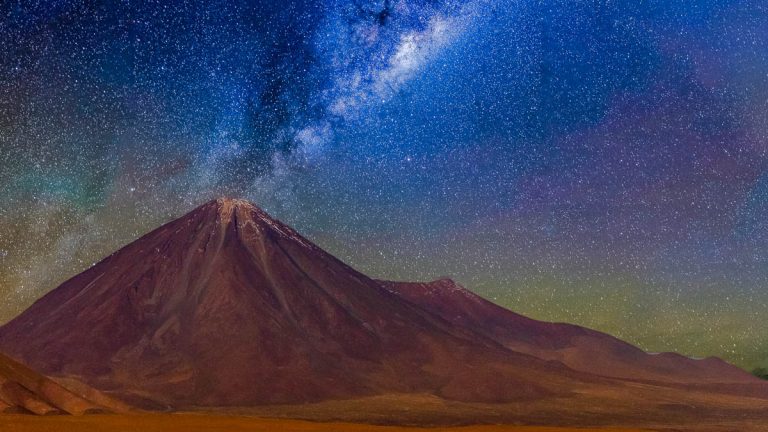
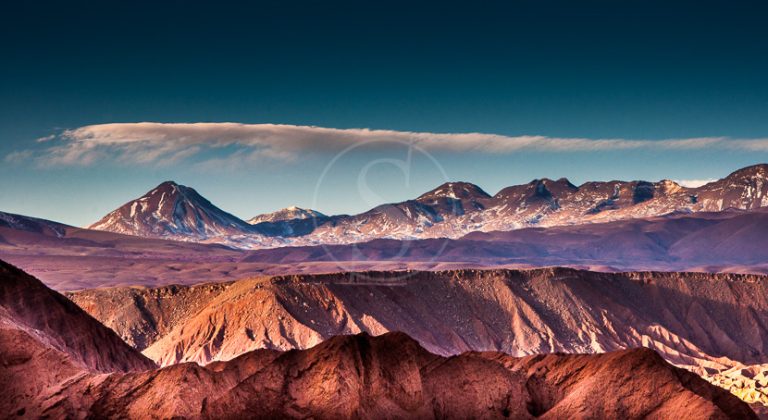
Perhaps in Chile, on the altiplano, in the Antofagasta region, at the foot of the volcanoes, where the many striking Tatio geysers erupt.
I arrived there still half-asleep after a far too short night in San Pedro de Atacama.
My local guide had advised me to get there well before sunrise, and his words, tinged with both admiration and apprehension, still echo in my mind. So it was with more curiosity than reassurance that I covered, at four in the morning, the kilometres of winding track leading to the geysers.
It’s at dawn that you can witness these astonishing, noisy, short-lived columns of steam.
The phenomenon holds no real mystery for a seasoned geologist — it results from the sharp temperature swing between night and day. But the surrounding atmosphere and conditions keep the enigma alive for a traveller like me.

Chile Tatio Geysers
I’m quickly drawn in. The scene itself is startling. The smell of sulphur, the darkness, and the roar of the geysers combine into an incredible spectacle.
In the cold morning air, and thanks to the altitude — over 4,000m — clouds of steam sometimes rise as high as ten metres.
On foot, I zigzag between the geysers, and at times I lose all sense of where I am. All my senses are alert, yet overwhelmed. Too much noise, too few visual landmarks. I’m cold. I grope my way forward rather than walk. Steam surrounds me, I can no longer see anything, the geysers’ smoke blinds me. I struggle for breath, the acrid smell chokes me. I feel myself losing control in this gripping whirlwind. And then…
And then the timid warmth of the rising sun grows more insistent. Some columns of steam try to resist its now-biting attacks before vanishing back into the depths of the earth from which they emerged. For a while, I can’t tell which side will win this natural battle.
But as time passes, the sun’s heat gradually clears the vapour.
By 10am, there is nothing left. The surface of the earth is calm again.
I’m dazed, like a boxer stunned by his opponent’s relentless blows.
Lightheaded, I realise that for nearly three hours, the Tatio geysers put on a genuinely striking, astonishing, remarkable display — one I experienced right at the heart of nature and the Earth’s own sources.
Easter Island soon without sun?
The point-of-no-return falls of Agua Azul, Mexico
A rendezvous with the moon at Iguaçu Falls, Argentina