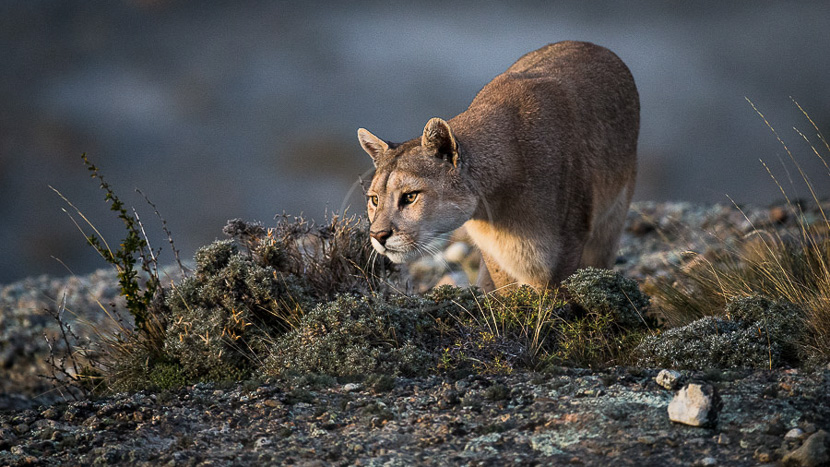
The puma, a species endemic to the American continent, is the largest predator in Chile and Argentina. This enigmatic cat is also the most iconic animal of this wild land. In Mapuche culture, this mountain lion is a sacred creature.
How do you find one?
Difficult to observe, as it is solitary and blends into the landscape, the puma is spotted by a team of trackers, who radio the guides, who then lead clients to the observation site as soon as the animal is sighted within Torres del Paine park.
The heterogeneity of the landscapes, where mountains, glaciers, valleys, ponds and large lakes converge, along with the authorities’ determination to make it a model for the conservation of ecosystems, landscapes, species and genetic diversity, have contributed to its great popularity, making it a place that, at certain sites and certain times of year, we would consider far too crowded.
Here as elsewhere, everyone tends to head to the same place at the same time. Torres del Paine now welcomes more than 200,000 visitors each year and, in high season, bottlenecks of hikers can form on its flagship trail, the Circuito W. This overcrowding has an impact on soil erosion and regeneration. What’s more, tourist infrastructure within the park has developed rapidly and haphazardly. And yet the puma population, benefiting from increased protection funded by tourism, has continued to grow in recent years. Too many people, but more protected pumas.
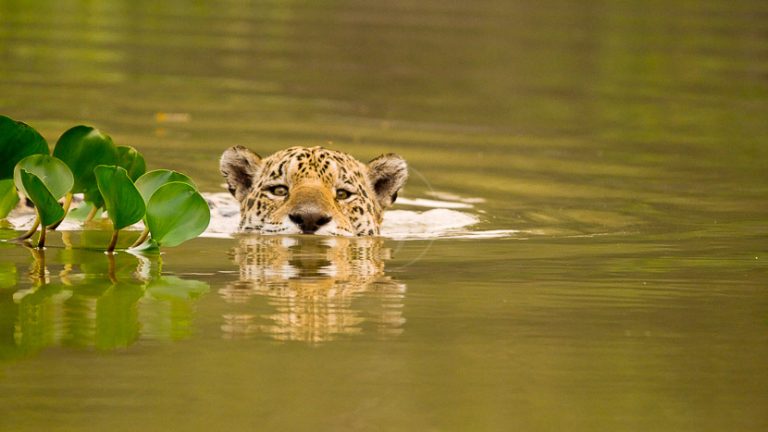
A paradox not unlike the situation of the jaguar in Brazil’s Pantanal. Or that of the tiger in India, particularly in Ranthambore and Bandhavgarh national parks, where, in our view, visitor numbers are far too high. Overcrowded sites, yet ones where the big cats are better protected and their numbers slightly on the rise.
As is always the case when addressing conservation, finding the right balance is difficult.
That said, we must admit that experiencing Torres del Paine under overcrowded conditions is not the image one has of Patagonia. Nor is observing pumas alongside hordes of photographers lined up to capture the same shot!
Yet it is possible to “do things differently”, if only by travelling against the grain or off the usual timing.
The fine season is not limited to December, January or February. October brings resurgent vegetation. April offers a beautiful late season, as vegetation takes on its autumn colours.
Discovering less-travelled or untravelled trails, and having the chance to “occasionally” cross paths with a puma, also makes for a unique experience. Patagonia and Torres del Paine park are not limited to the Torres del Paine towers.
There are a thousand and one ways to do things well by doing them differently.