Warning: this article should be consumed in moderation!
Ice wines, big-cat wines, atoll wines, Andean wines, Down Under wines, floating-vine wines, wines from the ends of the earth…wines with strange and singular reputations are increasingly finding their way to our tables and palates.
A first world tour of unusual wines – and often excellent ones!
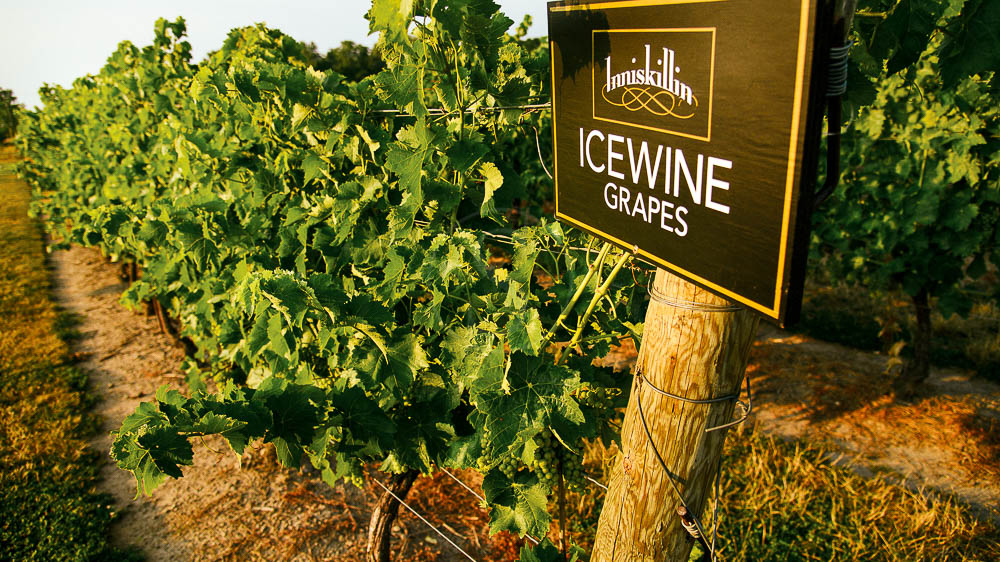
Canada, ice wines
Yes, you read that correctly, Canada is also a wine country.
More commonly celebrated for its vast wild expanses, its ever-present nature, natural parks and its striking wildlife, Canada has become a small producer with limited cultivable land – Ontario and British Columbia.
Yet it has earned a certain worldwide reputation with a rather particular and unusual wine: ice wine.
First appearing in Germany in the 18th century, ice wine is today produced in countries whose vineyards are exposed to harsh winters – France (Alsace), Luxembourg, Austria, Slovenia. But it is in Canada that this wine has become more than a product; it has been raised to the status of a national emblem.
A dessert wine par excellence, ice wine stands out for its incomparable delicacy. Low in alcohol, fine and harmonious, smooth and refined, with subtle aromas of rose, spice and dried fruit, it is the skilled result of a particular late-harvest technique that involves picking grapes in the depths of winter, at night, when temperatures reach… -7°C to -10°C!
The grapes, few in number and frozen, are immediately pressed at outdoor temperature to preserve the ice crystals that naturally concentrate sugar and acidity into a delicate balance.
This is a wine for intimate moments.
Among friends, each small sip is savored slowly. Between hedonists.
Rangiroa, atoll wines
Rangiroa…an atoll…an island in French Polynesia, no doubt. You’ve got it!
Rangiroa is an atoll with a sublime lagoon in the Tuamotu archipelago, an hour’s flight from Papeete, celebrated until now for its beaches, its marine life, its black pearl cultivation – and now also for…its vineyard!
Since the experiment was first attempted in the early 1990s, Tahiti’s wines now extend across a 12-hectare vineyard producing close to 25 tons of grapes.
Between lagoon and coconut palms, the Rangiroa vineyard, a point of pride for the atoll, is surely one of the most singular in the world.
Due to its location, of course, but also because the vine’s continuous growth, trained on pergolas, allows for two harvests each year, in May and September.
Given the high rate of evaporation, each vine is fitted with its own drip irrigation. Maximum sunlight, sea air and coral soil limit the presence of insects and disease. Each harvest travels by boat, unhurried, across the blue waters of the lagoon, to the winery in the village of Avatoru. It’s no surprise that the wine develops subtle iodine notes – isn’t the white wine called “blanc de corail”…
A wine unlike any other, without question.
Manuia (cheers! in Tahitian)