
(c) epa
A major Maya city, spanning 22 hectares, has just been discovered in Mexico, in the state of Campeche, by an international team of archaeologists.
The site includes residential areas, plazas, ball-game courts, as well as pyramids reaching up to 23 metres in height, along with numerous stelae and altars, some of which still bear traces of stucco.
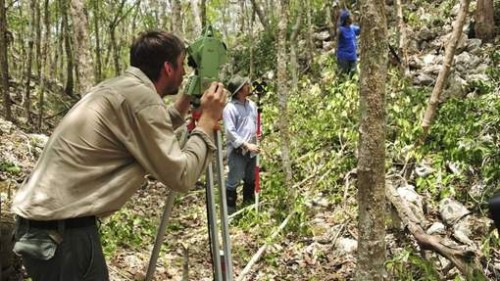
Hidden in the jungle for centuries, the site’s existence was only recently suspected by researchers thanks to aerial photographs and the use of stereoscopic imaging, which revealed lines that were likely architectural remains. The team then went into the field and uncovered a highly significant complex.
The city, named Chactun by the archaeologists — meaning “Red Stone” or “Great Stone” in Maya — is believed to have reached its peak between 600 and 900 AD.
Discover more photos of Chactun
Presentation video of the Maya city discovery by the team of archaeologists.
Journey into the heart of the Maya world