The Chobe River, in Botswana, is an extraordinary playground — provided you discover it under the right conditions, away from the crowds of tourists who concentrate in well-identified areas, mostly for practical reasons and ease of access from where they’re staying.
Our favourite way to experience Chobe is aboard a houseboat, spending two nights on the river, away from Kasane, the region’s main town located to the east of the national park.
Note that not all boats allow you to stay overnight on the river, including some of the most luxurious ones. In our view, this is nonetheless an essential element for a successful safari at Chobe. Waking up in the morning with, potentially, elephants right outside your cabin is quite different from being docked at a town, however African it may be!
The other option is to stay at a lodge located inside the national park, or further west towards Ngoma — a good two hours along a dirt track from Kasane following the river, or one hour via the tarred road connecting Kasane to Ngoma.

Being off the beaten track guarantees encountering very few people early in the morning, at the very start of the safari, and in the evening, at the very end of it — the two most rewarding times of day.
The reason is simple: visitors are required to leave the park before closing time (roughly at sunset). While 98% of tourists head out to reach their lodge, those staying inside the park… remain in the park and make their way back to the lodge at a leisurely pace after sunset. The sense of exclusivity, of benefiting from exceptional safari conditions, is very real. And justified.
Being in the westernmost section of the park guarantees crossing very few vehicles over the course of the day. The travel time to reach this area is far too long for most tourists, who typically do safaris of about three hours in the morning and two to three hours in the late afternoon, departing from Kasane. Almost everyone stays in the easternmost part of the park.
To illustrate all this, here are a few photos from a trip taken in June.
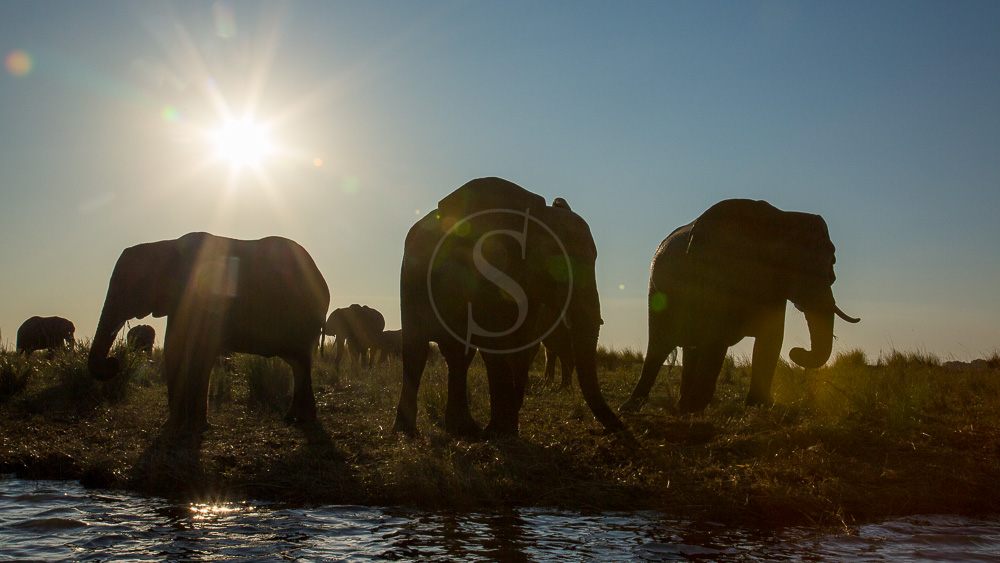
These photographs were taken over a single afternoon, between 3pm and 6:30pm, as the sun set and we watched the full moon rise from the tender used for river safaris.
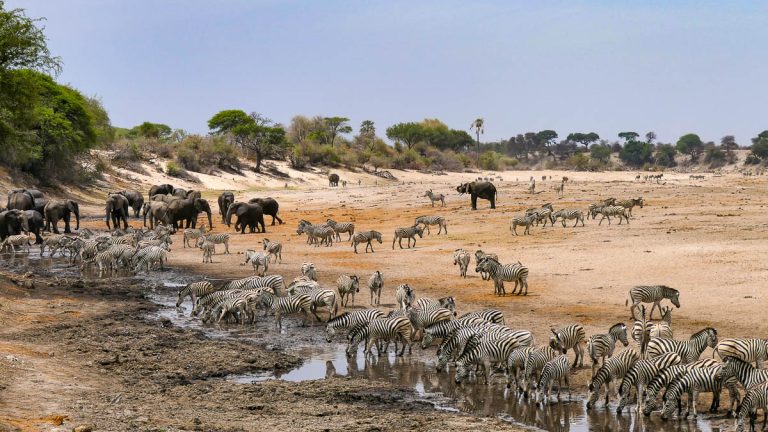
They’re nothing extraordinary in themselves, but I believe they illustrate well the richness and diversity of wildlife along the Chobe River. Seeing so many different species in such a short time, over just a few kilometres, is nonetheless quite remarkable.
And yet, June isn’t even the most favourable season. August, September and October are the months when many animals come to the river daily, to drink in the late afternoon — Chobe being the only available water source at the height of the dry season.
It’s during this season that one can very regularly observe dozens of elephants at a time along the river, or swimming across it. There are very few places in Africa (if any) where it’s possible to observe such a concentration of pachyderms.
© Etendues Sauvages – Tous droits réservés
Some predators are missing, you might say…
No matter! We’d had some luck that very morning, with several lions busy around a giraffe killed overnight — all wrapped in the beautiful light that Africa reserves for early risers.
© Etendues Sauvages – Tous droits réservés