Latin America is home to spectacular landscapes shaped by countless beaches. A world of a thousand facets. An environment both gentle and harsh at the crossroads of species, where land meets sea, giving way to a form of freedom and discovery. Landscapes displaying a multitude of colours, to the great delight of those who behold them.
Here are a few essential beaches:
In Costa Rica, Uvita has seven idyllic beaches and 35 kilometres of Pacific coastline known for the migration of its humpback whales. A haven of peace for those seeking the quiet of nature.
In Brazil, Lençóis Maranhenses and Fernando de Noronha are among the country’s most spectacular natural sites.

Lençóis Maranhenses Park, Brazil © Shutterstock
In 1981, a national park was created to protect the various biotopes found within the Lençóis Maranhenses site: marine habitats, forest, mangrove, rivers, and of course a vast system of dunes and saltwater lagoons. The best season to see these lagoons filled with water runs from July to September — a striking display of colour.
Fernando de Noronha and the Rocas Atoll lie off the Brazilian coast. This former Brazilian military base, 520 km off Recife, is today a model of environmental preservation. With its untouched nature, fine sand beaches, and exceptional underwater landscapes, it will delight nature lovers.
The island is a sanctuary for turtles and dolphins. A genuine refuge made up of 21 islands, Fernando de Noronha is ideal for scuba diving, surfing, snorkelling, hiking, and horseback riding.
Its beaches are among the most beautiful in Brazil, and the environment is protected through a restricted, controlled number of visitors.
In Panama, Isla Palenque is a private island set in a remote corner of the Gulf of Chiriquí. It is the ideal destination for those seeking unique experiences in Panama’s nature, the exploration of a private island, and relaxation at a sophisticated eco-resort that celebrates natural beauty, local adventure activities, authentic fine cuisine, and holistic wellness offerings.
In Nicaragua, Playa Arenas Blancas is a striking beach on the country’s Pacific coast. It lies in the Rivas region, near the town of San Juan del Sur. A popular destination for beach lovers and surfers, known for its idyllic scenery and relaxed atmosphere.
In Baja California, Balandra Bay is known for its turquoise waters and white sand beaches. It comprises seven beaches considered among the most beautiful in Mexico and among the finest in the world. As the tides shift, sandbanks appear, turning the landscape into a dreamlike spectacle.

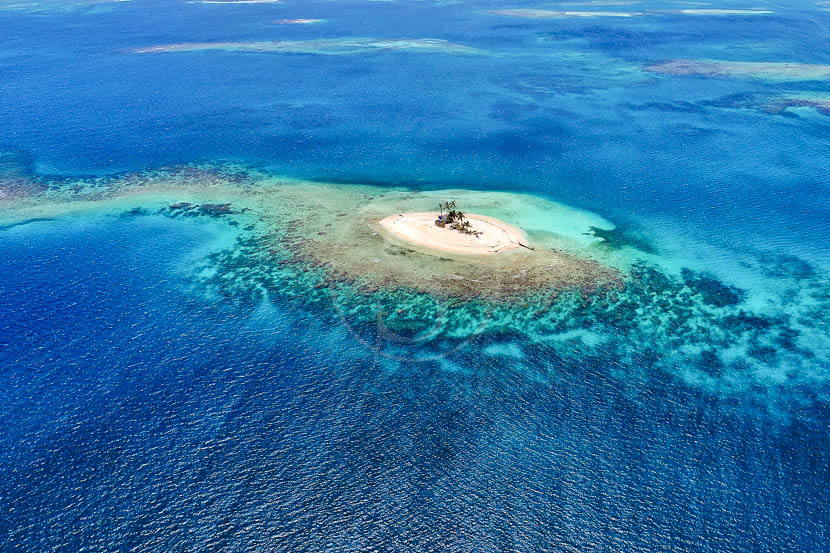
Los Roques, Venezuela © Tucaya
Off the coast of Venezuela, to the north, lies Los Roques. These islands offer a remarkable stay to anyone who ventures there. The archipelago holds intense underwater life, with spectacular coral formations — the ideal place to experience “le grand bleu”.
Some 350 islands span this vast archipelago, designated a natural park for the great biodiversity of its fauna and flora.
In Argentine Patagonia, the Valdés Peninsula is a site of global importance for the conservation of marine mammals. Here, there is no beach towel to spread out and lounge on! This is the domain of significant breeding populations of endangered southern right whales, elephant seals, and sea lions. Local orcas have developed a hunting strategy unique in the world, adapted to the region’s coastal conditions.
A beach can also be a place for quiet observation — a wild expanse stretching as far as the eye can see.
In Peru, the Paracas National Reserve is home to the only red beach in South America, one of just five in the world. It offers a striking final view over the Pacific Ocean, full of colour and contrast — a setting suited to a range of activities, from birdwatching and swimming in turquoise waters to adventure sports.
Finally, within Tayrona National Park on Colombia’s northern coast, Cabo San Juan beach offers a unique landscape bordered by lush forest. A sheltered cove suited to exploration, relaxation, swimming, and the observation of a truly singular biodiversity.