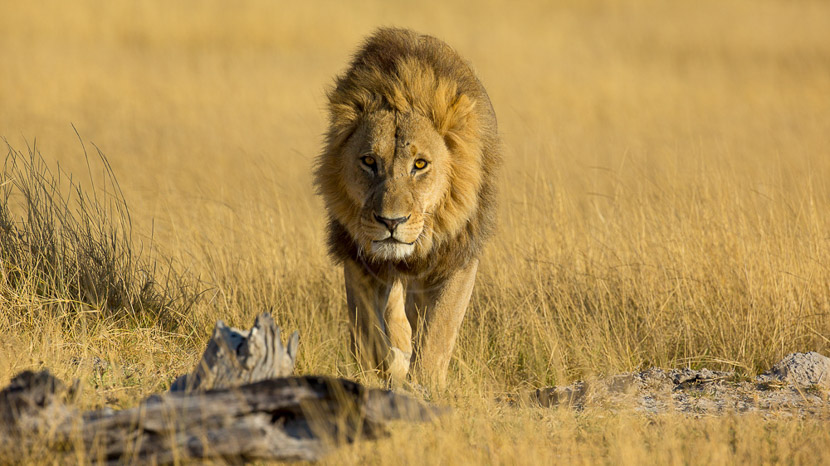
The lion, a symbol of majesty and power, is one of Africa’s most iconic animals.
But it is a colossus with feet of clay.
While the African lion population is estimated to have been around 200,000 individuals a century ago, today there are between 20,000 and 25,000 lions across the whole of Africa — a drop of nearly 90% in a century.
Moreover, the lion’s geographic range has shrunk considerably. Once present across almost all of sub-Saharan Africa, lions are now confined to scattered pockets, mainly in East and Southern Africa. The largest populations are found in Tanzania, Botswana, Kenya and South Africa. Tanzania alone is home to about 40% of Africa’s total lion population. By contrast, in regions such as West and Central Africa, lions are on the brink of extinction, with fewer than 500 individuals remaining in these areas.
The future trajectory of the lion population depends on several critical factors. The main threats include habitat loss due to human expansion, declining natural prey, conflict with local communities, and poaching. Extensive agriculture, infrastructure development, and urbanization are major causes of the destruction of lions’ natural habitats, as with other iconic African animals (elephants, cheetahs, leopards, rhinos, gorillas, giraffes…). In addition, conflicts with herders protecting their livestock often result in lion deaths.
Facing these challenges, several conservation initiatives have emerged over the years. For example, the Big Cat Initiative, launched by the Great Plains Foundation (Dereck & Beverly Joubert) with National Geographic in 2009, has helped save nearly 4,500 lions.
Other organizations are also doing remarkable work:
– Panthera, an international organization dedicated to the conservation of big cats. Their flagship lion initiative, Project Leonardo, aims to secure “lion landscapes” across Africa by creating ecological corridors to connect isolated lion populations.
– Lion Guardians, an NGO that combines traditional Maasai knowledge with modern conservation methods to protect lions in Kenya and Tanzania. They train members of the Maasai community to monitor and protect lions while minimizing conflicts between lions and people. They also work to shift community attitudes toward lions, encouraging peaceful coexistence.
– Born Free Foundation, an organization founded by Virginia McKenna and Bill Travers, dedicated to protecting wild animals, including lions. Their work in Africa focuses on protecting lions within reserves and national parks. Born Free campaigns against the trophy hunting trade, supports conservation efforts in protected areas, and works to establish new reserves for endangered lions.
– African Parks, an NGO that manages national parks and nature reserves across Africa, with a focus on protecting biodiversity, including lion populations. They take on full park management, including security, anti-poaching efforts, habitat restoration, and local community development. Their management model effectively protects lions across several key regions of Africa. Their work in Akagera National Park is particularly notable for the reintroduction and protection of lions and rhinos in Rwanda.
All of these NGOs (and others) play a key role in the fight for lions’ survival in Africa. They act on multiple fronts, from habitat protection to community awareness, as well as anti-poaching efforts and human-lion conflict mitigation.
All these conservation efforts are essential to reversing the trend. However, these measures require sustained support, both financial and political. To some extent, responsible tourism contributes to this protection — first by providing funds dedicated to conservation, and second by demonstrating to local communities who depend on this tourism that a living lion is always worth more than a dead one.
In the years ahead, the survival of the African lion and other threatened species will largely depend on the ability of governments, NGOs, and communities to work together to protect these predators. If conservation efforts are intensified and sustained, lion populations could stabilize, or even increase slightly in some regions.
However, without significant intervention, the decline could continue, leading to the total disappearance of lions from several parts of the African continent.
Africa would then no longer be quite the same.