



Little Kulala, Namibia © Dana Allen Wilderness
Namibia
Listening to the silence of the desert
Tailor-made journey to Namibia
Read more Collapse


We design your tailor-made journey

Why travel to Namibia
- BREATHTAKING LANDSCAPES
- A LIVING DESERT
- KAOKOLAND, LAND OF THE HIMBA
- THE EASE OF A SELF-DRIVE JOURNEY
- ELEPHANTS, DESERT LIONS, BLACK RHINOS
- EXCEPTIONAL LODGES
A favorite of ours


Nuit à la belle étoile dans le Namib
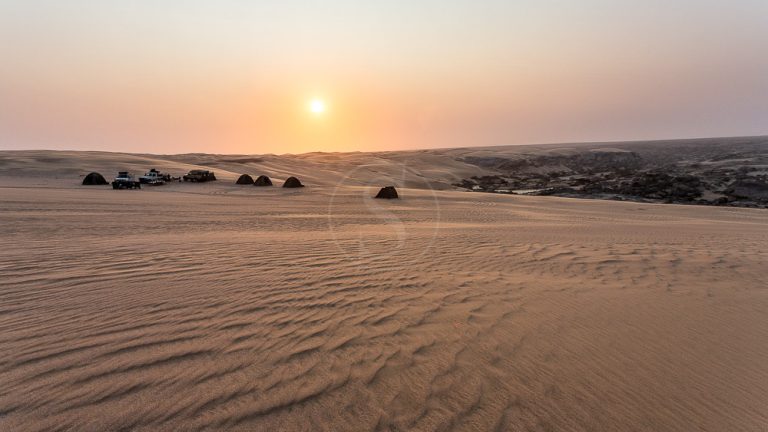
By Laurent Guillot, Founder of Étendues Sauvages: "It was in the NamibRand reserve that I had one of my finest memories in Namibia, walking across magnificent landscapes of orange-sand dunes and spending nights under the open sky on a simple camp bed, the Milky Way as my only ceiling. Here, it's complete disconnection. A real moment of rest for our often overloaded minds!"
Discover this favouriteConsult us to design your tailor-made journey


When to travel to Namibia
Budget to plan for
Expert advice
A critical note
Your questions / Our answers
Is Namibia a safe country?
Namibia is one of the safest countries in Africa. While Namibians aren’t among the most welcoming people, you’ll generally feel safe in this beautiful country.
That said, don’t forget you’re a tourist. Namibia remains a poor country compared to European living standards, so basic precautions still apply, here as elsewhere.
How far apart are the different stops?
Namibia is a vast country, desert-like, almost lunar. We travel there to discover breathtaking landscapes and the sheer sense of space so rare in our overcrowded countries.
The sites to visit are spread far apart — all the better, as the drive between each one offers a chance to take in the full beauty of this country.
On average, count on 5-6 hours of driving per day for the longer legs, 3 to 4 hours for the others.
Here are a few examples:
Windhoek – Otjiwarongo: about 4h
Otjiwarongo – Etosha: about 6h
Etosha – Palmwag: about 4h30, and for Twyfelfontein: about 5h30
Twyfelfontein – Swakopmund: about 5h30
Swakopmund – Sesriem: about 6h
Sesriem – Windhoek: about 5h30
Keep in mind that it is essential to respect speed limits, on tarred roads and especially on gravel tracks.
The maximum speed allowed for tourists is lower than the maximum speed allowed for locals.
What additional costs should be planned for on the ground during a trip to Namibia?
It all depends on the type of trip chosen: a self-drive road trip with a rental car, a tour with a private guide, or a fly-in safari.
For self-drive tours, you’ll need to budget for park entrance fees, fuel, tips, and some meals.
Plan on roughly 400/500 euros per person, depending on the length of the trip and the type of vehicle rented.
Fuel does need to be budgeted for, and depending on the vehicle type, we’ll give you a more precise estimate. For a classic ten-day trip, plan on a budget of around 400/500 euros per vehicle.
Entrance fees for the main parks shouldn’t exceed 40 euros per person.
For tips to guides/drivers, we recommend between 5 and 10 euros per person per day. This amount should be adjusted to the number of people in the vehicle, so that the total tip doesn’t exceed 25/30 euros per day.
For lodge staff (including the cook, waitstaff, housekeeping, receptionist, etc. — the amount is then shared equally among them), a tip of between 5 and 10 euros per day per person is recommended.
For meals not included, plan on roughly 10 euros for a light lunch and around 20 euros for dinner, depending on appetite!
These estimates should of course be adjusted according to the service received and your satisfaction. The final amount remains entirely at your discretion.
Will you see a lot of wildlife in Namibia?
Namibia is clearly not the country to choose for a pure photo safari. That said, the landscapes are worthy of a master painter’s canvas, and you’ll come home with remarkable photographs!
Which animals will you see in Namibia, and where? Etosha National Park is without question where you’ll have the most encounters, thanks to its artificial waterholes.
Species found in the park include: lions, cheetahs, leopards, oryx, zebras, giraffes, elephants, rhinoceros, wildebeest, greater kudus, springboks, dik-diks, elands, jackals, bat-eared foxes, warthogs, and numerous bird species.
Aside from Etosha, Damaraland is where you can go in search of the remarkable desert elephants, as well as black rhinoceros.
Desert lions, for their part, are much harder to observe and are found only around the Hoanib River, which is less accessible.
To maximize your chances of seeing them: travel during the dry season between June and October, when all the animals gather around the park’s many waterholes.
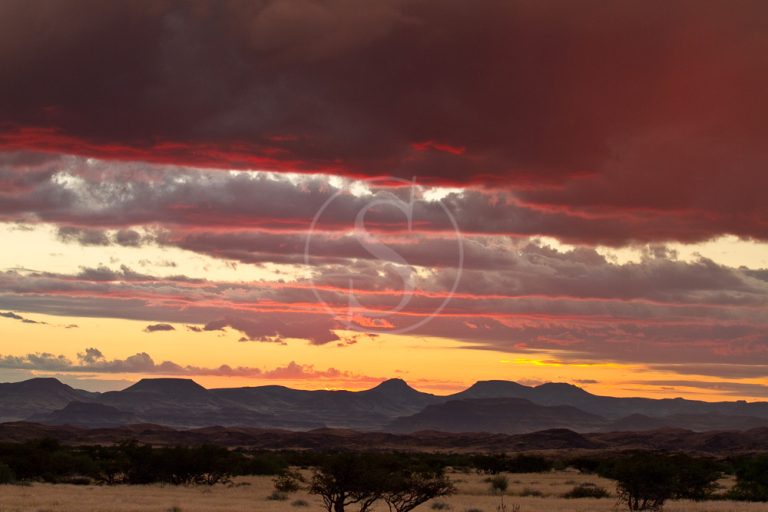
If you’d rather prioritize the beauty of the landscape and its shifting colors, choose April or May, when the arid ochre land fills with golden grasses and scattered shrubs under the striking light that follows the end-of-storm season.