My local guide from Foz do Iguaçu, Véronica, had warned me: approaching the Iguaçu Falls from the Argentine side could not be a hike like any other.
For her, it was essential to see them differently, her own way — that is, avoiding the quick, superficial stroll, the tourist crowds, hastily taken photos and the clichéd shots of the average visitor. One had to let oneself be surprised and absorb the magic of the place.
She was right. And I remain grateful to her to this day.
At nightfall, around 10pm, I found myself in her company at the entrance to the national park. Deep in the forest, in the soft mugginess of winter, we could hear the song of nocturnal birds. We walked toward I know not where, our steps faintly lit by the glow of a timid lamp.
But now and then, looking up, I had the strange impression that we were being guided, as if drawn in by a distant light piercing the dark foliage, pulling us toward the penetrating murmur of the falls.
As we emerged from the forest, the lunar spectacle was there.
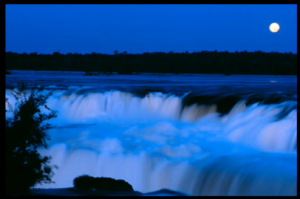
Gripped by this unusual and extraordinary beauty, I crossed the walkway spanning the Paraná River, toward the “garganta del diablo” (Devil’s Throat).
The Moon would not stop staring at me. Or was it I who could not tear my gaze from its glow.
Before me was this luminous disc lighting up the full immensity of the Iguaçu Falls, and the further I walked, the more deafening the roar of the water became, the brighter the Moon shone.
The water, the night, the roar, the light. The light, the roar, the water, the night.
The Moon had a rendezvous with the Devil.
Magical.
I was there.
An unforgettable moment.
Argentina and the flavours of the New World
Canoeing in Ushuaia, Patagonia
The point-of-no-return waterfalls of Agua Azul, Mexico