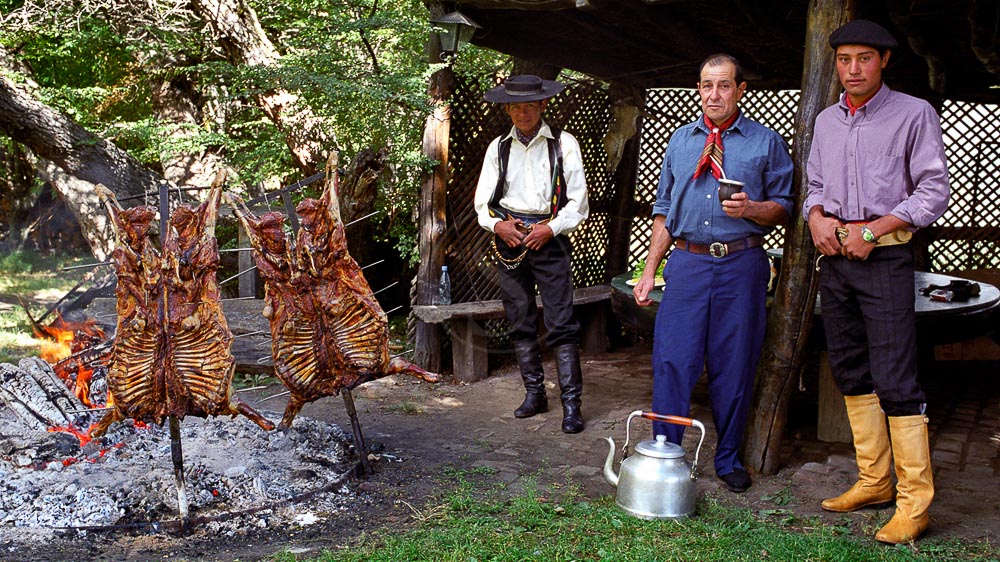
What is the most symbolic dish of Argentine cuisine? The empanada or the asado?
A difficult question to answer… even for Argentines themselves, since depending on the region they come from, the era, their cravings and above all their mood, their preference can go to either one!
What is certain, however, is that it would be a shame to reduce Argentine cuisine — gastronomy, rather — to these two dishes, as emblematic as they are.
How could one fail to mention puchero, centolla, locro, parrilla, carbonada en zapallo, matambre, tamal, vitel toné, milanesa napolitana, provoleta, fideos, gnocchis, dulce de leche, alfajor, medialunas, budín de pan, flan casero, mazamorra…
What? Your mouth isn’t watering yet? Is all this Argentine to you?
Read on…
Social symbols
– even though variants of it are found in most South American countries, the empanada is a small stuffed turnover that makes Argentines feel patriotic when they eat it, so attached are they to it. It is sold everywhere, eaten everywhere — in the street, at the office, at lunch, at dinner, with friends or family — and can be crispy or melt in the mouth.
It is one of the most common answers to the question “qué comemos?”.
Known as criollas, mendocinas, tucumanas, and so on, empanadas are made of meat, onion, hard-boiled egg, olive, paprika and cumin, all wrapped in a crescent-shaped pastry turnover.
– if there is one ritual in Argentina, it is that of the asado (besides mate*, of course): this grilling party of whole, enormous cuts of beef is another social bond that brings Argentines together.
The world’s leading consumers of meat — more than 60 kg per person per year — Argentines celebrate days off by preparing and sharing, with pride and affection, meats drizzled with chimichurri sauce, such as tira de asado (beef ribs), vacio (flank steak), chorizo (sausage), morcilla (blood sausage) and achuras (offal). All served with a light salad and a good Malbec wine from Mendoza or San Juan.
Argentine classics
Puchero (Argentine stew), centolla (giant king crab), locro (stew), parrilla (grilled rib steak), carbonada en zapallo (stuffed squash), tamal (stuffed cornhusk parcel), guiso de lentejas (lentil stew), estofado de carne (beef stew), matambre (vegetable-stuffed rolled meat)… all these flavourful dishes are the delights of “criolla” cuisine.
Italian influences
With nearly half of the Argentine population of Italian descent, it is only natural that some recipes carry a hint of the Mediterranean peninsula: vitel toné (veal and tuna), milanesa napolitana (breaded cutlet topped with ham, tomatoes, mozzarella and oregano), fideos (dried pasta), gnocchis (for good luck for the other 30 days of the month, eat them preferably on the 29th and tuck some banknotes under your plate!), tiramisu, pan dulce and turrón (panettone), ice creams (especially dulce de leche!), not forgetting the famous fugazzeta pizza…!
Sweet treats
– when it comes to bringing back a souvenir from Argentina, a jar of Dulce de Leche should find its place in your luggage. An essential element of Argentine gastronomy, dulce de leche (or milk jam) is a source of national pride, but above all remains a boundless culinary pleasure, a world of sweetness in an ocean of flavour, a delight for the taste buds, an exhilarating awakening of the senses, a return to childhood… pure happiness!
– in 2004, Argentines were consuming nearly 6 million alfajores a day for a population of 36 million! This pastry consists of two or more biscuits joined by a sweet filling (dulce de leche) and most often coated in chocolate or powdered sugar.
– not forgetting medialunas, small pastries sold by the dozen, budín de pan, a popular dessert, a type of Argentine pudding served with a few spoonfuls of dulce de leche, flan casero, a classic caramelised dessert served with… dulce de leche, and mazamorra, a kind of rice pudding but made with corn instead of rice!
Wine
In just a few years, Argentina has become the world’s fifth-largest wine producer.
So much so that Mendoza is now part of the network of the world’s eight Great Wine Capitals, alongside Bordeaux, Florence, Porto, Bilbao-Rioja, Melbourne, Cape Town and San Francisco.
It is on the finest lands of the Cuyo region (Mendoza, San Juan, La Rioja) that wine growing has flourished (96% of production), centred on Argentina’s emblematic grape variety, Malbec, recognised as the best in the world.
*Mate
Neither a culinary tradition nor an Argentine symbol, mate is a true religion in Argentina.
An infusion made from yerba mate leaves, mate is consumed without restraint, at any hour, in any place.
At once a stimulant like coffee, a drink with diuretic and digestive properties, a pastime, and a social bond among family or friends, any occasion is a good reason to share mate.