World Rhino Day is an occasion to highlight the threat of extinction facing this emblematic animal of the savannah.
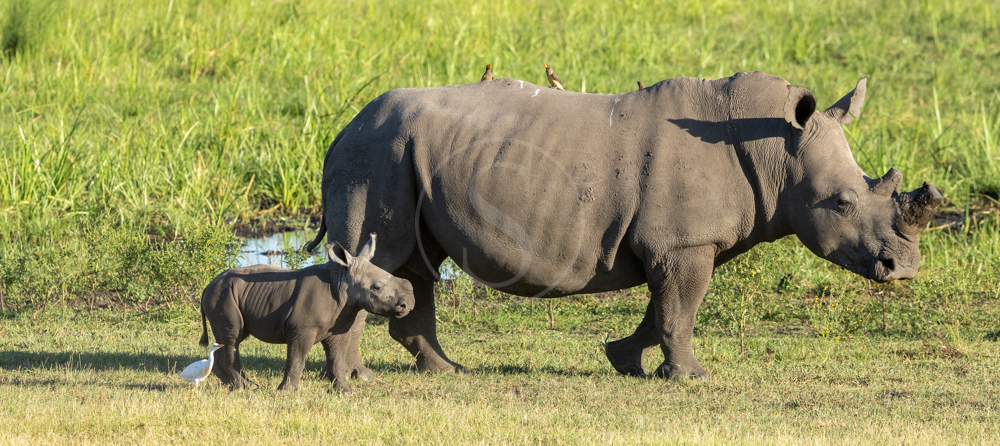
The rhinoceros is defined above all by its sheer bulk and a prehistoric bearing. Imposing, surprising yet elegant, it is the largest land mammal after the elephant. The hairless skin of certain species forms plates and folds, giving the impression of being armour-plated.
Around 30,000 rhinos remain on the planet, 70% of them in Africa. Mainly in South Africa, Namibia, Kenya, Tanzania and Botswana.
Measuring up to 3.50 metres in length and weighing as much as three tonnes, it is among the most imposing species. Africa is home to two:
– the white rhinoceros, with a flat upper lip adapted for grazing. It lives in groups and feeds mainly on grass,
– the black rhinoceros is a solitary species, its pointed upper lip serving mainly to browse on small shrubs.
As the territories available to these giant herbivores shrink, food resources become insufficient, putting rhinos at risk.
This species has few natural predators, but its chief enemy remains the poacher, who tracks it relentlessly to seize its horn — feeding a lucrative criminal trade in which China, Vietnam and Thailand are the main importing countries. Highly prized in traditional Asian medicine despite no scientific validation of any therapeutic properties, these unfounded beliefs fuel surging demand for horn in Asia, where it now commands a higher value than gold.
The illegal trade in rhino horn is one of the most highly organised criminal activities in existence. Yet this traffic has been banned internationally since 1977 under the CITES Convention, signed by 182 countries. The illicit trade in wild species constitutes the fourth-largest illegal market in the world, affecting tens of millions of animal and plant specimens every year.