Tierra del Fuego.
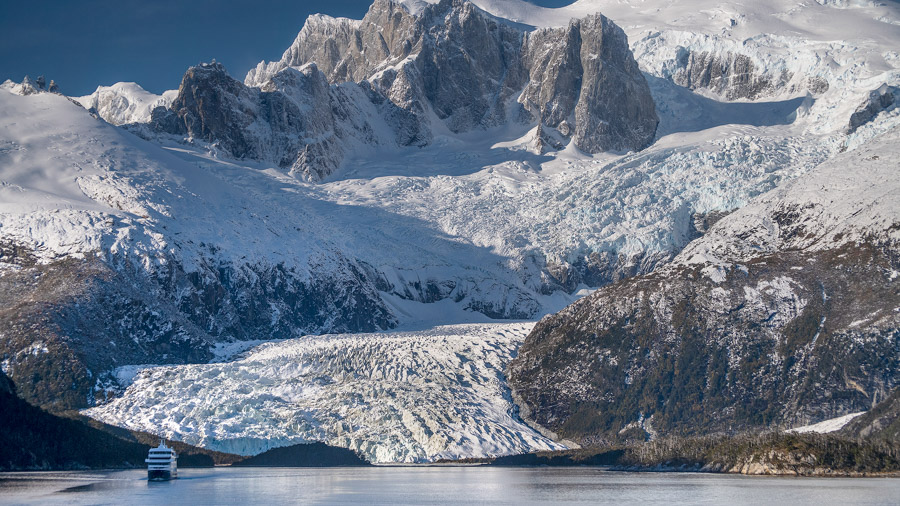
This name, likely first heard as a child hummed in a nursery rhyme, conjures an imaginary land, inhospitable and inaccessible. Yet this land does exist, though it’s true that this end of the end of the world carries a certain magic. More than a single landmass, it is a constellation of islands, a continuation of the Andes and Patagonia, pointing toward the Antarctic Peninsula. A link between the southern tip of the American continent and the final continent. These islands hide within a maze of fjords and channels, bordered to the north by the Strait of Magellan, crossed by the Beagle Channel where Ushuaia sits, and punctuated at its endpoint by Cape Horn Island. A vast region of unique, wild landscapes, accessible only by sea, into which a multitude of glaciers flow.
Exploring it is a rare and memorable privilege.
Nowhere else can you approach so many glaciers so closely. One always imagines glaciers clinging to mountains; in these lands, the mountains and their glaciers plunge straight into the sea, blending their icy colors — from white to black, through every shade of blue.
Other colors strike throughout the journey: the golds, oranges and reds of the leaves of Patagonia’s endemic beech trees. Lengas and coigües of the Magellanic primary forest set the mountainsides ablaze with golden foliage during the austral autumn. All these colors are heightened by the extraordinary light and the pure air of these latitudes. You are immersed in splendid, untouched nature, essentially free of any trace of human passage.
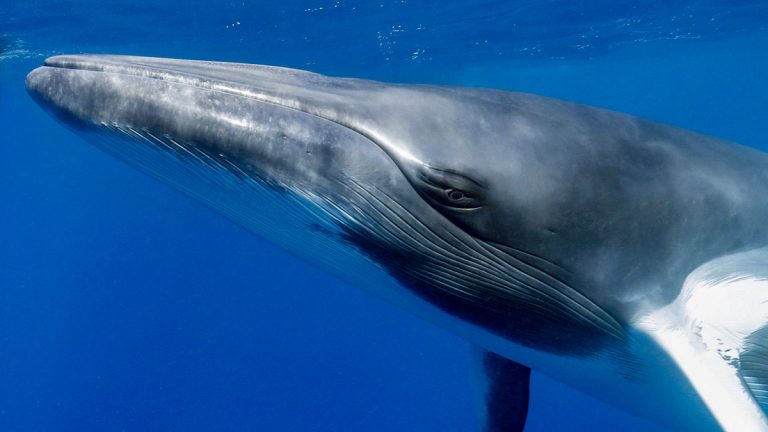
The cruise follows the rhythm of two daily Zodiac® outings, allowing close observation of nature. It’s a pleasure to glide across the calm waters of the fjords to discover wildlife, approach glaciers, or visit historic sites. During these outings, you have the chance to observe Magellanic penguins up close, along with sea lions and, at times, elephant seals — so massive and often so still on land that at first glance they can be mistaken for rocks. The penguins’ waddling gait on dry ground may draw a smile, but underwater, their agility and blazing speed command admiration. They seem to literally fly through the water.