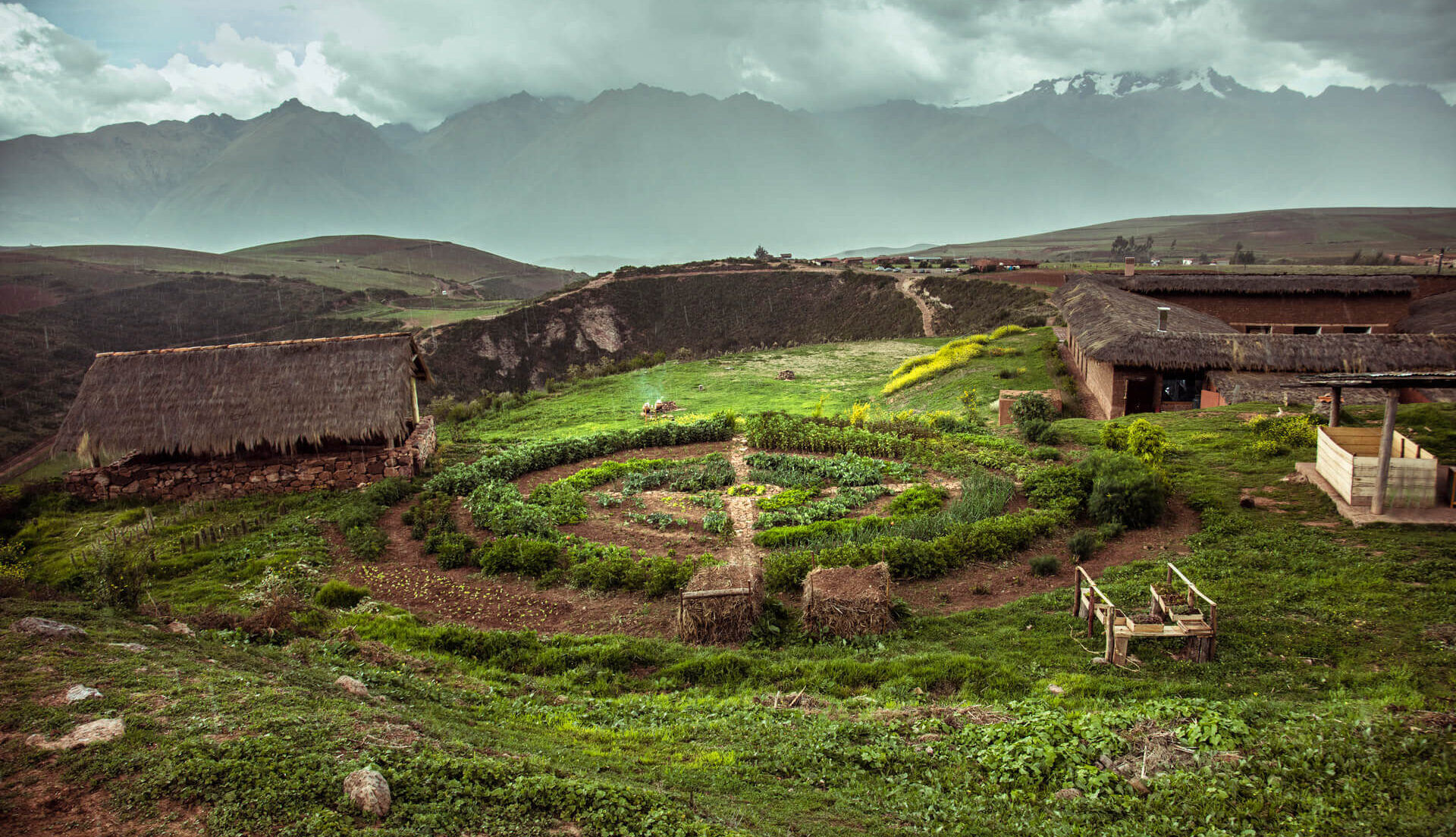
The Mil restaurant sits within a landscape shaped by ancient civilizations, where ancestral dishes can still be prepared. First and foremost a culinary laboratory, its cerebral cuisine will captivate those curious to discover unfamiliar flavors and new knowledge. Virgilio Martinez’s idea is to “taste traditions and savor emotions” through a deliberately unsettling gastronomy. This boldness has turned the restaurant into a destination in its own right — a culinary journey where the palate is steeped in the flavors of Peru.
The philosophy of this establishment rests on its connection to the daily life of local farming communities: an encounter and blending of traditional know-how with the chef’s own, alongside a respect for the ecosystem at the heart of the cuisine.
 A shared reflection on this ecosystem links those who work it and those who are nourished by it. Mil operates under a strong ethical framework: it is ecologically minded, respects both nature and people, creates jobs, and preserves the identity of indigenous cultures. The restaurant works with two farming communities in Moray, whose maize and potato growers sell it 50% of their harvest.
Whether a utopian bubble or a self-contained microcosm, the chef has more than one trick up his sleeve to sustain this intoxicating environment: cooking oils are recycled into candles, organic waste is composted, paper and coffee grounds are transformed into napkins, and solar panels have been installed.
He conceives of his restaurant above all as a center for interpreting ingredients, open to a range of experiences — notably a menu that unfolds across “15 different Peruvian ecosystems, ranked by altitude, from 15 meters below the Pacific Ocean to 4,200 meters in the Andes.” Full immersion at Mil is an invitation to pause, shift pace, and look at the world from another angle.
Located at over 3,500 meters of altitude, in Peru’s Sacred Valley, chef Virgilio Martinez showcases a cuisine built around an Andean ecosystem.
Each plate is steeped in local, ancestral culture. Dishes are built mainly around vegetables and grains, though the more adventurous diners can opt for a protein-rich discovery of llama or alpaca.