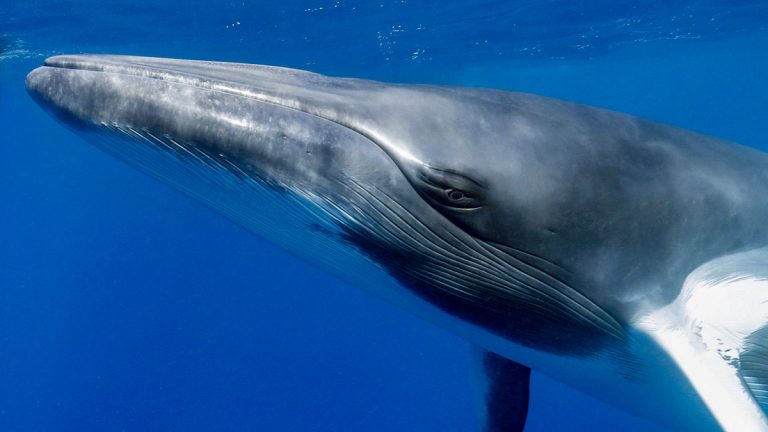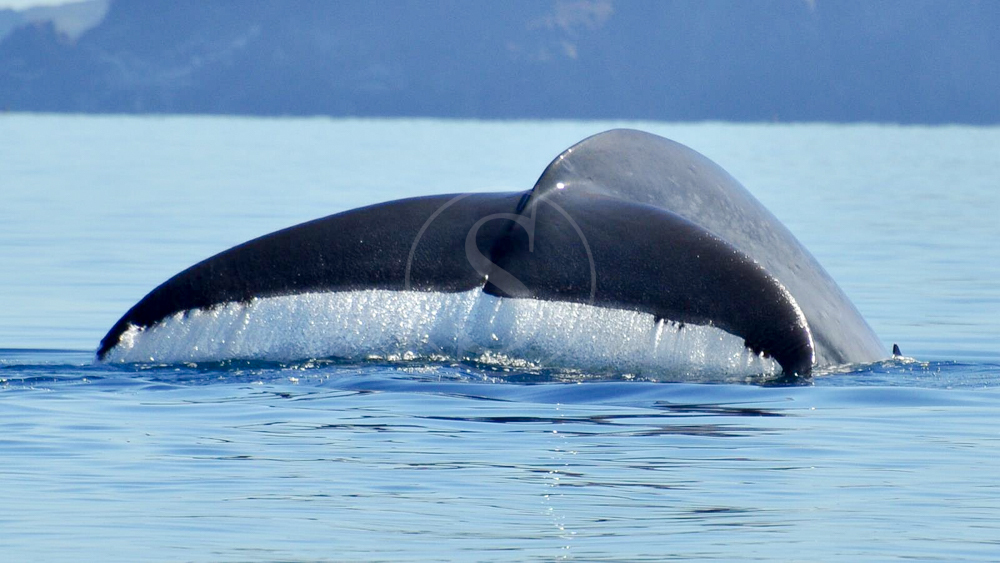
A great dancer of the deep, the whale impresses with its elegance and grace.
Despite its massive build, this ocean ballerina displays a kind of finesse and lightness. Like a siren, the humpback whale’s song casts a spell over observers, stirring powerful emotions. A deity of the sea, its power has long stirred fear in humans — fears tied to good and evil, death and rebirth, God and the Devil. A duality that surrounds this great sea creature.
“Whales have always exerted a kind of magnetism over humans.”
Impressive creatures, they are able to “feel” the movement of their bodies through the water and detect currents as well as temperature variations. Some species still have vibrissae, such as the bowhead whale, right whales, and gray whales.
In Baja California, gray whales show a strong inclination for physical contact, particularly between mother and calf. The calf often rubs its rostrum against the hull of a boat, even seeking out the touch of observers.
It is a rare encounter, charged with emotion.
”I had the feeling that this whale was presenting her calf to us,” says Laurent Guillot, founder of Étendues Sauvages, who first observed these gray whales in 2005. “She was positioned beneath him, and you could see she was helping him rise to the surface, as if to ease the encounter. An extraordinary moment”.
Gray whales give birth in Baja California in January, which is why they remain for several weeks in these warm, shallow waters, naturally sheltered from orcas, their main predator. Once the calf is strong enough, the mother heads back up the Pacific coast to reach the Beaufort Sea, beyond the Bering Strait.
January to April is therefore the ideal period to witness these encounters and take part in this remarkable spectacle, which highlights the beauty of this mammal.
It is one of the most compelling experiences to be had in Mexico, and beyond.
© Etendues Sauvages, Baja Expeditions, JC Arbonne