Every year the souls of the departed are invited to join the living to dance and feast. Skulls and skeletons flood the streets to a frenzied rhythm. During this period, more intimate commemorations take place in candlelit cemeteries.
Death is mocked, and the dead are welcomed with open arms to affirm the power of life.
In Mexican cosmology, death is not the end but the beginning of a long journey.
“The Mexican’s indifference toward death is nourished by his indifference toward life.” Octavio Paz
The departed are no longer here physically, but their souls reign and protect us.
A festive image of death, bursting with vivid colors. A joyful, cheerful commemoration. An occasion to pay tribute to the dead with happiness, to accompany them on their long journey of rebirth.
Altars honoring deceased relatives are set up in every Mexican home.
Everything is decorated and adorned with flowers in honor of the traveling souls.
Preparing the offering happens in a warm atmosphere, because this is above all a joyful celebration where people get ready to welcome their departed.
Copal incense lends a particular scent to the room and wraps the offering in a mystical atmosphere. It cleanses the air and the space so that souls may come.
Cempasúchil (marigold) has a fragrance that attracts the dead and guides their souls to their final resting place.
Candles light the path of the departed and guide them into the homes.
The deceased’s favorite meals and drinks are prepared on the altar.
For each offering, water and salt are also placed. The water quenches the departed’s thirst after their long journey, and the salt purifies their soul.

Dia de los muertos, Mexico © Shutterstock
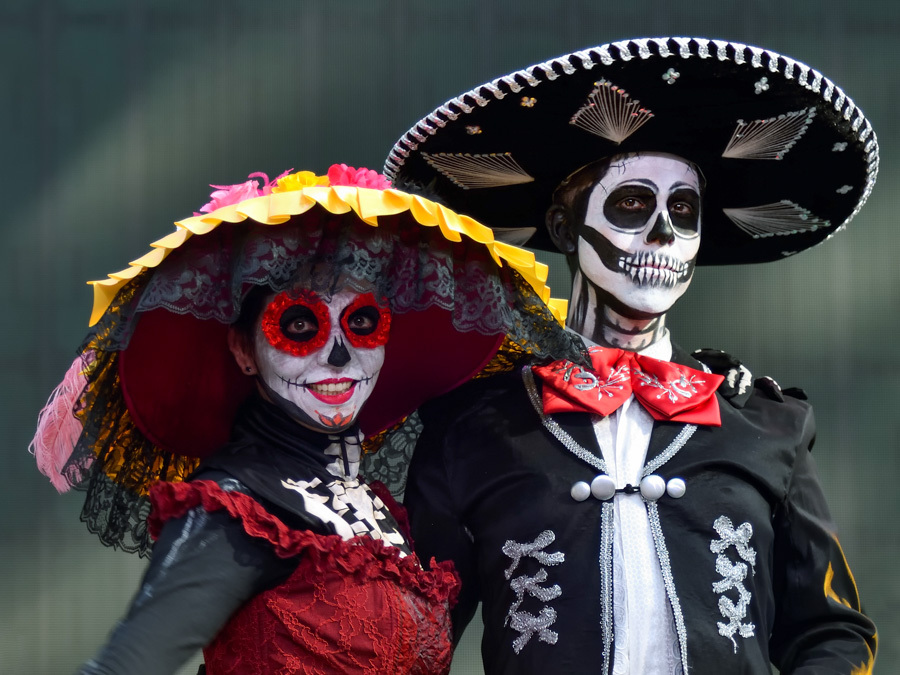
In Mexico City, public offerings are set up in the streets, in squares, and at universities. What they have in common is the omnipresence of the Catrinas, as mannequins, figurines, or in flesh and bone. A popular figure in Mexican culture, the Catrina is a female skeleton dressed in rich clothing, usually wearing a hat.
Originally, the Catrina was a caricature created to mock indigenous people who were beginning to grow wealthy.
All over the streets, people apply makeup to themselves and to others to take on the appearance of a catrín. A carnival-like atmosphere pervades the Day of the Dead. The fervor of this Catholic people is palpable in these moments, as they rejoice in the presence of their departed loved ones and pray for their safe journey from purgatory to paradise.
El Día de los Muertos is a national celebration that has existed and endured for more than 3000 years. The modern celebration of this day blends pre-Hispanic religious rites with Christian festivities. It takes place on November 1st and 2nd, the day of All Saints and the day the Catholic Church commemorates the faithful departed, at the time of the corn harvest, in autumn.